AI FOR SMALL BUSINESSES IN GERMANY A practical event for a market that is ready to move Artificial intelligence has moved from curiosity to operating priority for German companies. At the Munich event, the discussion was noticeably more mature than the familiar “What is ChatGPT?” debate. The presentations and start-up…
EDF Non-Thematic SME Calls 2026 offer an accessible route into European defence funding for innovative SMEs and research organisations. Explore funding levels, eligibility requirements, consortium rules, EUDIS support and opportunities for Ukrainian innovators.
SAFE and Ukraine: Inside the EU’s €150 Billion Defence Instrument — and Why Ukraine Is Central to It
While much of the discussion around Europe’s €150 billion SAFE instrument focuses on defence procurement, one strategic fact is often overlooked: Ukraine is already embedded in most national SAFE investment plans. This article explains what SAFE funds, how Ukrainian organisations and their EU partners can engage with it, and why…
The Munich Startup Festival 2026 took place today at Backstage Munich — now in its fourth year and firmly established as the city’s central meeting point for founders, investors, and the wider startup ecosystem. What made today’s edition notable The program moved well beyond networking. Six panels on the main…
What the EU’s InvestAI rollout means for consortia, SMEs, and research organisations positioning now — before the formal EuroHPC call opens. A €20 Billion Bet on European AI Infrastructure The Council of the European Union has approved the creation of AI Gigafactories across the continent — large-scale, publicly co-financed compute…
Why this matters now For EU-funded projects, GEO is not just a marketing trend. It is becoming part of how project results, partners, technologies and impact pathways are discovered by journalists, policymakers, industry stakeholders, investors, future consortium partners and even funding-related audiences. Traditional dissemination still matters: websites, newsletters, events, publications,…
Introduction The European Innovation Council is becoming one of the most important instruments in Europe’s deep-tech innovation landscape. Its role is no longer limited to supporting individual start-ups or research-based companies. It is increasingly connected to Europe’s competitiveness, technology sovereignty, investment capacity and ability to transform scientific excellence into globally…
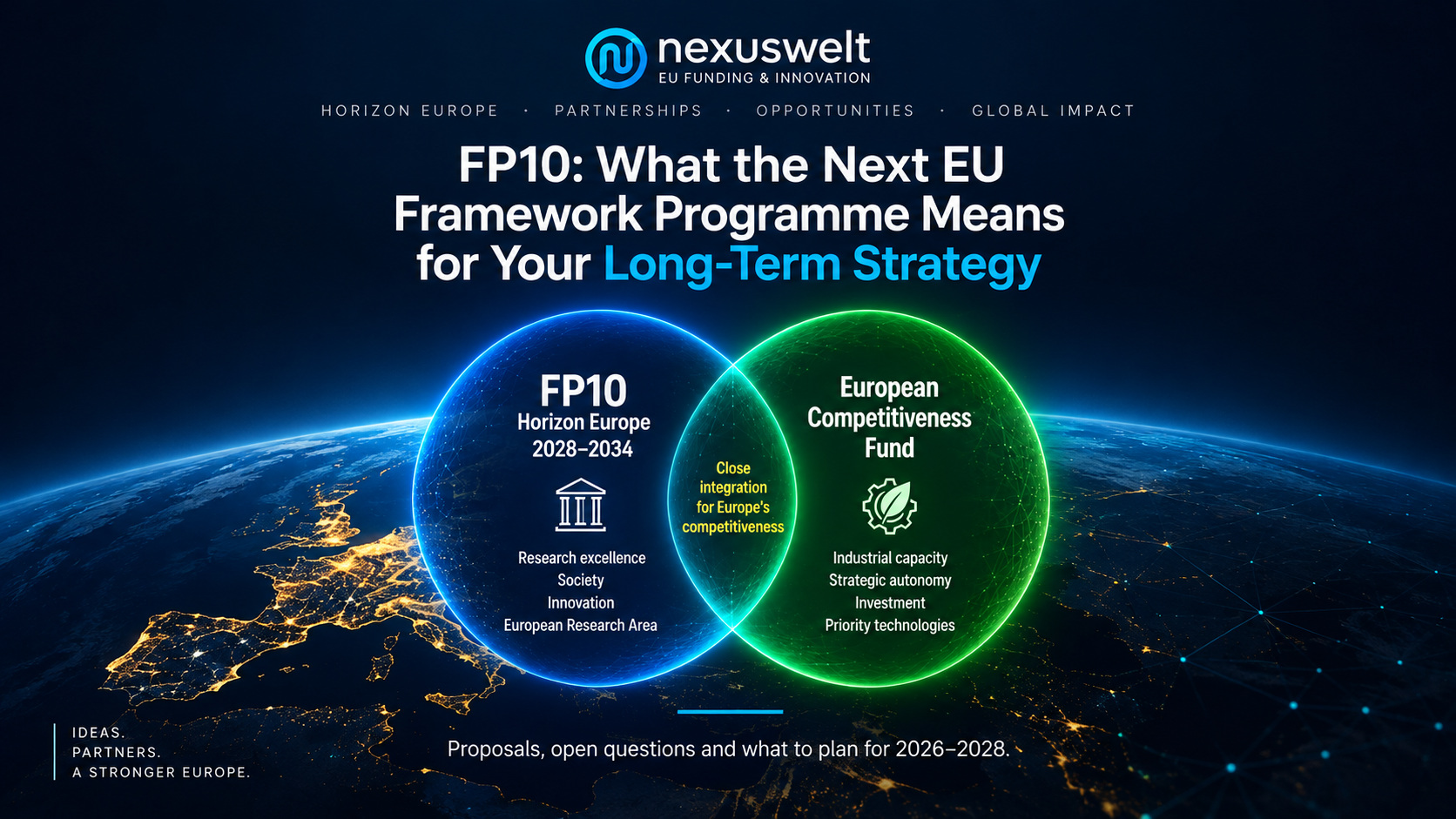
Introduction The next EU Framework Programme for Research and Innovation is already taking shape. Often referred to as FP10, the programme is expected to continue under the name Horizon Europe and cover the period 2028-2034. For companies, universities, research and technology organisations, public authorities, clusters and innovation ecosystems, this is…
Why this topic matters now Europe’s innovation landscape is changing. Technologies that were once developed mainly for civilian markets are now becoming relevant for resilience, security and defence-related applications. This creates opportunities for startups, SMEs, research organisations and industrial technology providers, but it also creates more strategic complexity. The key…
Executive summary AI is now one of the strongest themes across European research and innovation funding. Horizon Europe, Digital Europe, health, manufacturing, data spaces, public-sector innovation, climate, security and industrial transformation increasingly include AI-based methods, platforms and decision-support tools. But the strongest AI proposals in 2026-2027 will not be the…