Europe’s next funding cycle is starting to take shape
The most useful message from the Annual I3 Instrument Forum 2026 in Brussels was not about one new call. It was about the direction of Europe’s funding architecture. Research, innovation, regional capacity, strategic value chains and scale-up are being connected more closely.
For organisations planning their next R&I pipeline, this matters now. The architecture is not final, but the strategic priorities and the links between programmes are becoming much clearer.
The practical shift is: research -> innovation -> demonstration -> deployment -> scale-up.
1. MFF 2028-2034: a simpler and more strategic architecture
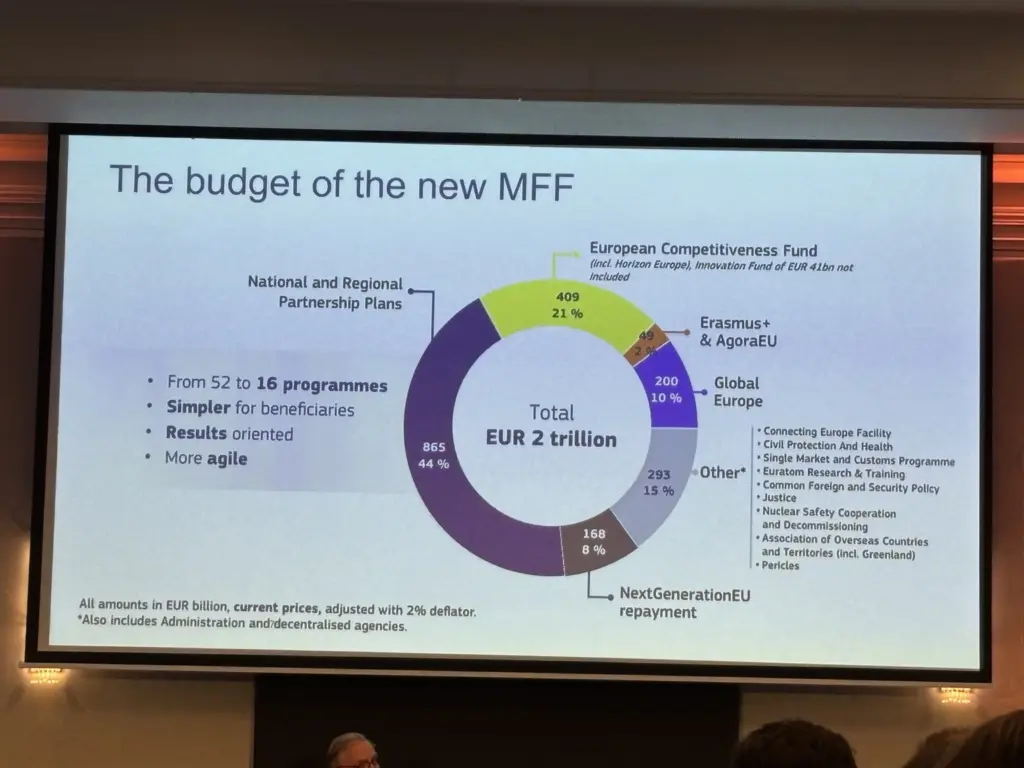
The European Commission has proposed a long-term EU budget of almost EUR 2 trillion for 2028-2034. The proposal moves from 52 programmes to 16 and is designed to be simpler, more flexible and more results-oriented.
For innovation organisations, the important point is structural. Competitiveness, research and innovation sit much closer together, while National and Regional Partnership Plans become a major delivery channel for investment and reform.
Official source: EU budget 2028-2034 – European Commission
2. The European Competitiveness Fund changes the investment logic
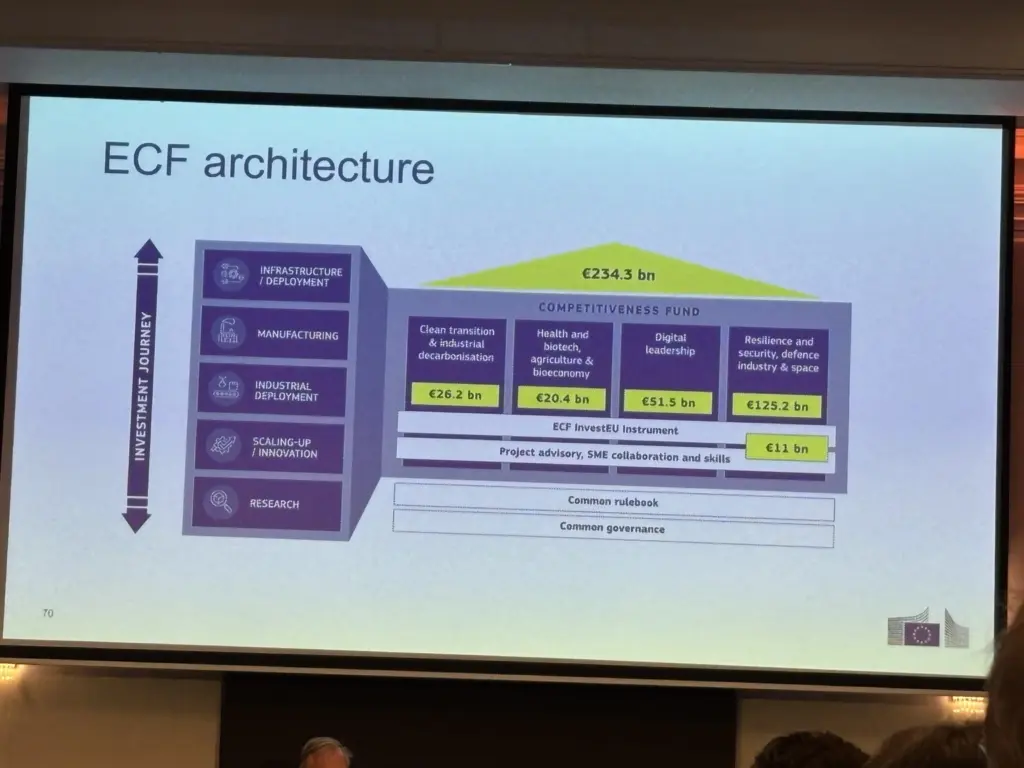
The proposed European Competitiveness Fund (ECF) is one of the biggest structural changes. The Commission describes a EUR 234.3 billion framework covering the investment journey from research and scaling-up to industrial deployment, manufacturing and infrastructure.
The ECF is organised around four policy windows: clean transition and industrial decarbonisation; health, biotech, agriculture and bioeconomy; digital leadership; and resilience, security, defence industry and space.
The toolbox is broader than grants. It includes procurement, targeted actions, a Single Market value-chain builder, production ramp-up actions, support linked to IPCEIs, InvestEU guarantees, financial instruments, blending and business acceleration services.
Official source: European Competitiveness Fund – European Commission
3. Horizon Europe remains central, but more connected to scale-up
Horizon Europe is not disappearing. The Commission is proposing a EUR 175 billion budget for Horizon Europe for 2028-2034. The important change is the stronger connection between excellent R&I, innovation ecosystems, deployment and the wider competitiveness agenda.
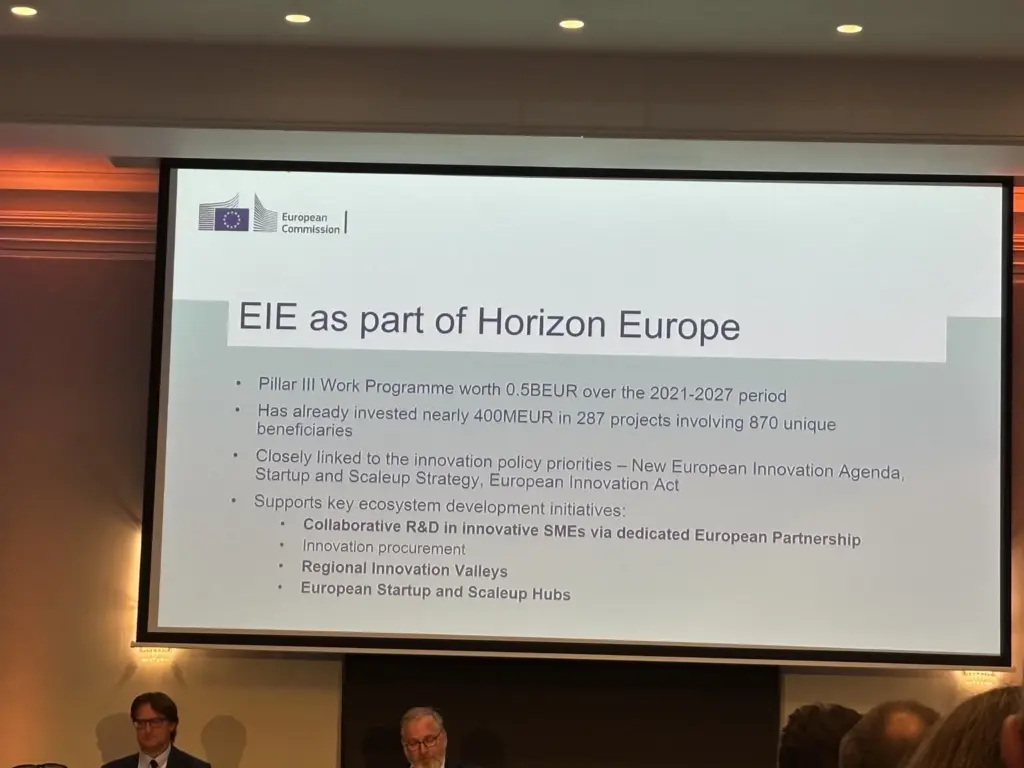
European Innovation Ecosystems (EIE) already play part of that connective role. EIE supports more connected innovation ecosystems across Europe and links regional actors, innovative SMEs, procurement, Regional Innovation Valleys and emerging Startup and Scaleup Hubs.
Official source: European Innovation Ecosystems – European Commission
Official source: Regional Innovation Valleys – EISMEA
4. Where I3 fits: from interregional cooperation to investment readiness
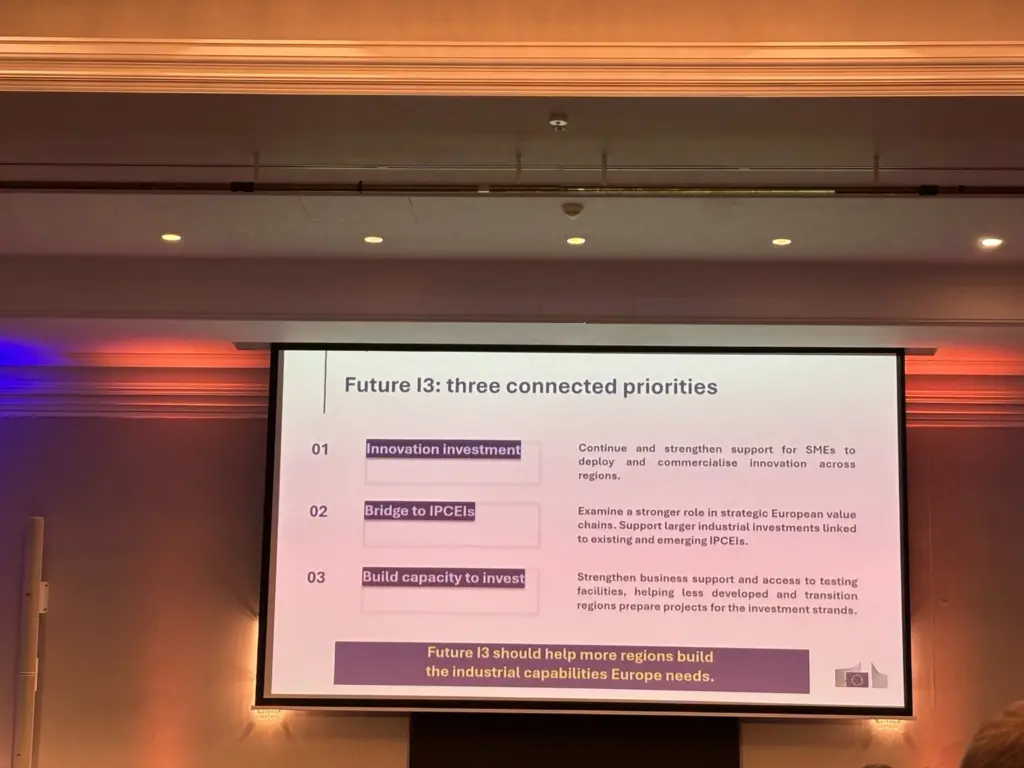
The Interregional Innovation Investments (I3) Instrument already works at the point where regional innovation ecosystems, companies and deployment needs meet. In Brussels, the future direction was presented around three connected priorities:
- Innovation investment – continue and strengthen support for SMEs and other actors to deploy and commercialise innovation across regions.
- Bridge to IPCEIs – explore a stronger role in strategic European value chains and larger industrial investments linked to existing and emerging IPCEIs.
- Build capacity to invest – strengthen business support, testing access and project preparation in less-developed and transition regions.
These are not final post-2027 rules. They are, however, a clear signal that regional innovation policy is being connected more directly with investment readiness and European value chains.
Official source: Annual I3 Instrument Forum 2026 – official programme
5. Current I3 results show why the pathway matters
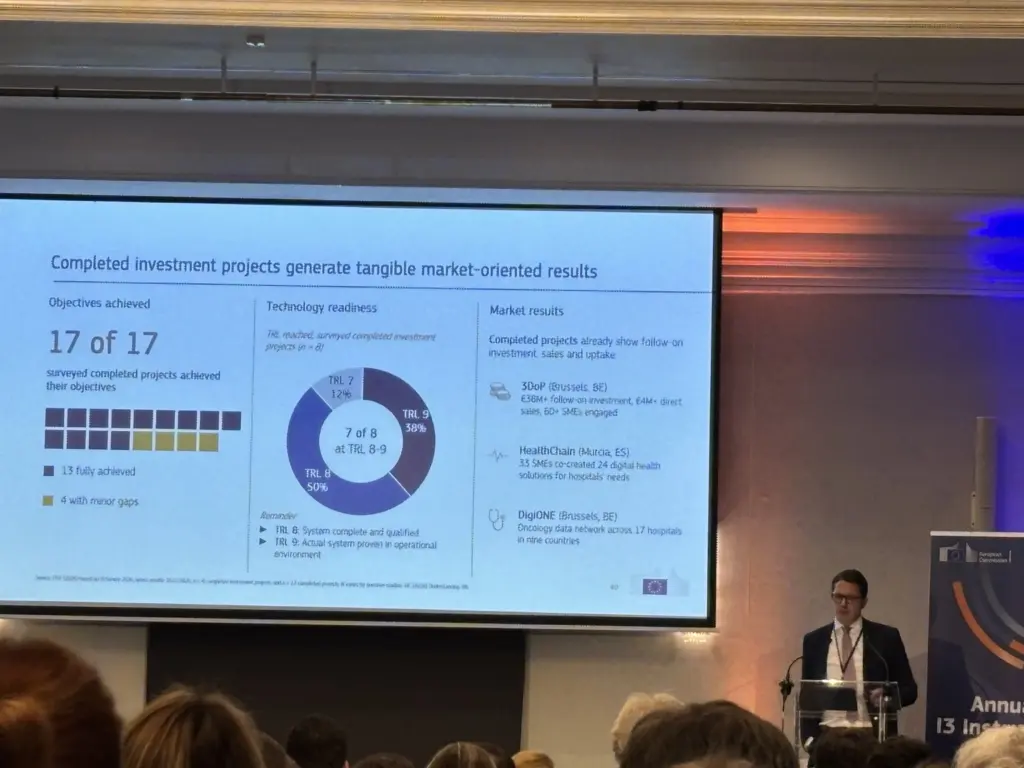
The first completed-project evidence is useful because it shows what can happen beyond consortium formation. According to EISMEA’s summary of the 2026 Forum, I3 now covers 84 projects, 185 EU regions, around EUR 356 million in awarded funding and 1,500 organisations.
- Seven of eight completed investment projects assessed reached TRL 8 or 9.
- Three of the eight completed investment projects secured follow-on financing.
- All 17 completed projects surveyed continued to work with their partners after the original project ended.
- More than EUR 35 million has been mobilised through cascade funding.
The Forum also showed how capacity-building projects can create a pipeline from interregional partnerships to business and investment plans, investment pipelines and deployment opportunities.
Official source: Annual I3 Instrument Forum 2026 results – EISMEA
6. What organisations should start preparing now
It is too early to plan against final rules that do not yet exist. It is not too early to prepare strategically. Organisations should already be able to answer:
- Which European strategic priority does our technology, capability or project strengthen?
- Which value chain, innovation ecosystem or regional strength are we part of?
- Are we at research, demonstration, deployment or scale-up stage?
- Which users, adopters, regions or industrial actors need to be involved earlier?
- What capability, infrastructure or evidence is missing before the next stage?
- Which programme or instrument could support that next stage?
This is more useful than trying to predict individual calls years in advance. The funding architecture will continue to evolve, but organisations that understand their role in the innovation pathway will be better prepared when the next work programmes arrive.
7. The Nexuswelt perspective: plan beyond the proposal
At Nexuswelt, this direction is consistent with how we approach European R&I projects. We work both on project access and participation and on implementation: communication and dissemination, exploitation and uptake, stakeholder engagement, technology acceptance and project coordination support.
The common thread is simple: impact should not begin at the end of the grant. Consortium positioning, stakeholder logic, exploitation pathways and uptake responsibilities should be considered while the project is being designed.
Related Nexuswelt pages: | EU Project Communication & Dissemination | Technology Acceptance & Innovation Uptake | EU Project Access & Participation
What to watch next
The 2028-2034 architecture is still under negotiation. The right preparation now is not to chase an unfinished programme map. It is to understand where your capabilities fit, which European priorities they strengthen and what will be needed to move from R&I to deployment and scale.
External official links – keep in article
European Competitiveness Fund
European Innovation Ecosystems