Europe has strong technologies. The European Business Summit 2026 in Brussels showed how much depends on the partnerships around them.
Held at Egmont Palace on 17?18 November under the theme ?Europe?s Time to Invest in Resilience?, the summit brought together policymakers, industry and investors to discuss clean energy, AI infrastructure, the single market and scale-up finance. Across very different panels, one idea kept returning: technologies reach the market when the right partners meet early enough.
For anyone building an innovation consortium for the 2027 calls, three lessons from Brussels translate directly into how a strong partnership is put together.
Key takeaways
- Infrastructure sets the clock. Grid connections, permits and site access can take years, so the site operator belongs in the plan from day one.
- A market is not a buyer. Projects need a named organisation that will decide on the purchase, not only a user who tests the result.
- The scale-up needs different money. Know early who could fund the step after the grant, and what evidence they will need.
1. Plan for infrastructure lead times, not only research time
The panel ?Powering Europe?s AI Ambition? was officially about sovereign infrastructure for the next wave of AI. In practice, it was about electricity, permits, equipment and people.
Olivier Micheli, President and CEO of Data4, described the obstacles to building data centres: grid connection, permitting, equipment supply and a growing shortage of skilled staff. He noted that a grid connection can take five to seven years in some cases. Adrian Studer of Ecolab argued that energy, water, cooling and the sustainability of a site have to be planned together from the very start of design.
The lesson reaches far beyond data centres. Whoever operates the infrastructure decides where, when and at what cost a new technology can run.
What this means for your consortium: if your pilot depends on a site, a production line, a test bed or a grid connection, bring its operator in before you write the work plan. Agree on access windows and constraints early, while the project design can still adapt to them.
2. Name the first buyer, not only the market
On the panel ?Turning Clean Energy into Europe?s Strongest Business Case?, Emmanuel Desplechin of Moeve listed what an investment decision needs: predictable rules, competitive energy, infrastructure that arrives on time, and someone who buys the output.
His example was renewable hydrogen used in the company?s own refineries, replacing the grey hydrogen they already consume. It is a practical case: Moeve is building the first phase of its Andalusian Green Hydrogen Valley at its existing La Rábida site in Huelva, with existing industrial demand as the first customer.
A market forecast tells you demand might exist. A named organisation that will take the output, under known conditions, tells you it does.
What this means for your consortium: an end user who tests the result is not enough. Ask who decides on the purchase, involve them early, and build the evidence they need into your KPIs and validation plan.
3. Design the financing route together with the result
On the same panel, Bertrand Piccard of the Solar Impulse Foundation described a model for getting efficiency solutions adopted without the client paying upfront. An investor finances the installation and is repaid from the energy savings. The model works only when three parties come together: the one who offers the solution, the one who needs it, and the investor who carries the cost in between. The Foundation has spent years identifying such solutions through its Solar Impulse Efficient Solution Label.
The single market panel added the scale-up perspective. Jean-Christophe Laloux of the EIB spoke about why European technology companies struggle to raise the larger rounds they need to grow, and about the European Tech Champions Initiative, which invests in funds able to write those larger tickets. Its second phase was launched in July 2026 as a pan-European investment alliance.
In the workshop on technology-powered growth, Marta Sjögren of Paebbl, a company that turns CO? into building materials, described what it took to move from years of research to an industrial process: entrepreneurs, capital and an engineering team able to scale it.
The partner who funds the start is rarely the partner who funds the scale-up.
What this means for your consortium: your exploitation plan should say who could finance the step after the grant, and your validation should produce the evidence they need to see.
A fourth point: capacity is not the same as adoption
One more message from the AI infrastructure panel deserves attention. Marc Reinhardt of Capgemini spoke about trust, skills and the readiness of organisations to use AI. Capacity can be built and still not be used as expected if the people who should work with it are not ready.
This is where technology acceptance work begins: involving future users while a solution can still change, not inviting them to a pilot once it is finished.
What this means for your 2027 consortium
Taken together, the summit points to four partners that innovation projects often bring in too late:
Partner | Why involve them early | Question to ask before the proposal |
Infrastructure or site operator | Sets the timing, access and cost of any pilot | When and under what conditions can we use your site? |
User | Decides whether the solution fits daily operations | What would make your teams use this every day? |
Buyer or procurement decision-maker | Decides whether the investment is justified | What evidence would you need to consider a purchase? |
Next-stage funder | Finances the step after the grant | What would make this result investable for you? |
In the projects we support, the buyer is the role most often left open until it is too late to change the design.
None of this requires a bigger budget. It requires the right partners at the table before the work packages are fixed. If you are preparing for the next round of calls, our guide on what consortia should decide before drafting for 2027 and our consortium gap review article are useful next steps.
Build the right partnership with Nexuswelt
Nexuswelt supports European innovation consortia with partner search and consortium building, stakeholder engagement, technology acceptance and exploitation planning, with a focus on semiconductors, digital technologies and industrial innovation.
If you are shaping a project for 2027 and want a second view on who should be at the table, write to Anna Lackner at anna.lackner@nexuswelt.com.
About the author
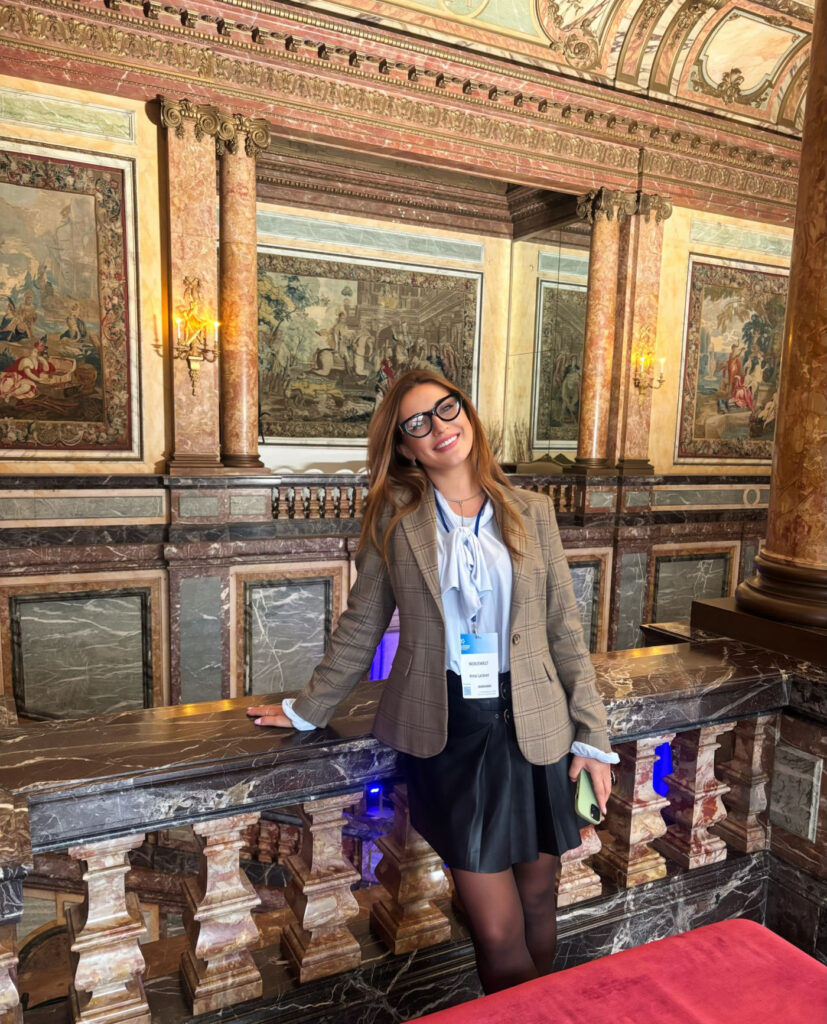
Anna Lackner is the Founder and Strategic Director of Nexuswelt. She has more than ten years of consulting experience in semiconductors, IoT, digitalisation and Industry 4.0, and works with European innovation consortia on partnerships, stakeholder engagement, technology acceptance and exploitation. She attended the European Business Summit 2026 in Brussels. Connect with Anna on LinkedIn.