Introduction: from clean policy ambition to fit-for-deployment projects
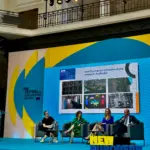
On 8 June 2026, Nexuswelt joined the Networking and Matchmaking on Horizon Europe Clean Industrial Deal Calls in Brussels, hosted at the NCBR Office in Brussels and linked to the wider European discussion around industrial decarbonisation, clean technologies and EU competitiveness.
The event was particularly relevant because it connected the policy direction of the European Commission’s Clean Industrial Deal with practical Horizon Europe proposal preparation, partner search and consortium building.
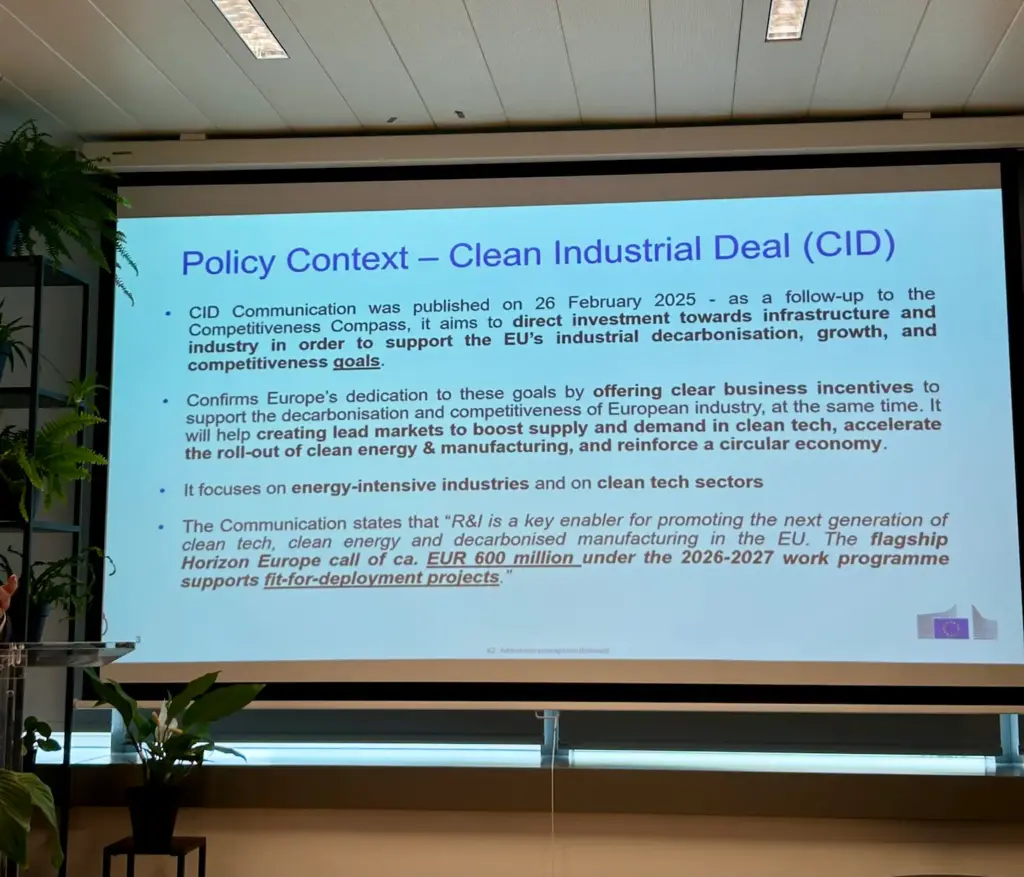
The Clean Industrial Deal was launched by the European Commission on 26 February 2025 as a plan for EU competitiveness and decarbonisation. It focuses especially on energy-intensive industries, clean-tech sectors, affordable energy, circularity, clean product demand, financing for clean manufacturing and stronger industrial resilience.
The discussion also sits within the wider Competitiveness Compass, which sets the strategic direction for strengthening Europe’s productivity, industrial capacity, innovation performance and economic security.
For Horizon Europe consortia, the message from the Brussels event was clear: the next generation of clean industrial projects will need to be much more than technically interesting. They will need to be close to deployment, connected to value chains, supported by credible business and market-readiness strategies, and able to demonstrate how public funding can unlock industrial transformation and follow-up investment.
This article summarises the main takeaways from the event, based on Nexuswelt participation, event materials, panel notes and the policy context around the Clean Industrial Deal.
Why this event mattered for Horizon Europe proposals
The Brussels matchmaking event was not a general information session. It was built around the practical question of how organisations can prepare stronger proposals for Horizon Europe Clean Industrial Deal-related calls, especially where industrial decarbonisation and deployment readiness are central.
The programme brought together national contact points, European networks, clean industry stakeholders, policy representatives and potential project partners. It combined policy context, call explanation, pitching and face-to-face meetings.
In this sense, the event reflected the role of networks such as NCP4Industry Plus, which supports applicants in Horizon Europe Cluster 4 Industry, and complementary networks such as GRENET and A.SPIRE that help connect industrial transformation stakeholders across Europe.
For Nexuswelt, the event was valuable because it showed what future clean industrial consortia will need to prepare: not only a strong technology concept, but also a credible implementation route, partner structure, dissemination and exploitation logic, and a clear story around competitiveness, decarbonisation and market uptake.
Event context: policy, networks and project readiness
Element | Relevance for applicants |
Policy frame | Clean Industrial Deal, EU competitiveness, industrial decarbonisation, clean technologies and circular economy. |
Funding frame | Horizon Europe 2026-2027 clean industrial and deployment-oriented calls. |
Applicant focus | Industrial actors, SMEs, research organisations, technology providers, value-chain partners, clusters and end users. |
Proposal logic | Fit-for-deployment projects with strong market readiness, business case, exploitation and industrial leadership. |
Consortium need | Cross-sector value chains with suppliers, users, technology developers, research actors and stakeholders. |
Nexuswelt relevance | Proposal support, consortium building, communication, dissemination, exploitation, impact strategy and stakeholder engagement. |
1. Clean Industrial Deal: competitiveness through decarbonisation
One of the strongest messages from the event was that industrial decarbonisation is no longer treated only as a climate target. It is now directly linked to competitiveness, supply-chain security, energy costs, clean-tech leadership and Europe’s ability to keep industrial value creation in Europe.
The European Commission’s Clean Industrial Deal describes decarbonisation as a driver of growth for European industries. It focuses on energy-intensive sectors such as steel, metals and chemicals, as well as clean-tech sectors that are necessary for industrial transformation, circularity and decarbonisation.
This has direct implications for Horizon Europe proposals. Clean industrial projects need to speak not only the language of innovation, but also the language of industrial competitiveness. Applicants should show how their solution can reduce emissions, lower or stabilise costs, support resilience, improve resource efficiency and create a stronger European industrial value chain.
The event presentation underlined that the Clean Industrial Deal follows the logic of turning decarbonisation into a business case. It is not only about research results. It is about creating markets, demand, investment confidence and deployment pathways for clean technologies.
2. What was discussed in Brussels
The event agenda included welcome remarks from the NCBR Office in Brussels and network representatives, an introduction to NCP4Industry Plus and GRENET, a presentation on the Clean Industrial Deal call context, a session on deployment pathways for zero-carbon solutions and project leads, followed by pitching, networking and face-to-face meetings.
Speakers and contributors shown in the event programme included representatives of NCBR Office in Brussels, NCP4Industry Plus, GRENET, the European Commission and A.SPIRE. The policy-oriented part of the event addressed the Clean Industrial Deal call context, while the more practical parts focused on project preparation, deployment, pitching and networking.
The presence of A.SPIRE was particularly relevant because A.SPIRE brings together process industry stakeholders and is closely connected to the European industrial transformation agenda.
For applicants, the most useful part was the translation of policy language into proposal logic: what kind of industrial consortia will be competitive, what role market readiness plays, why value-chain integration matters, and how projects should prepare for deployment beyond the funded period.
3. Key principle: open character, but strong deployment logic
One of the call principles presented during the event was the open character of the call. Applicants are expected to define the specific technology value chain they want to strengthen through innovative, competitive and decarbonisation-oriented solutions.
This flexibility is important because industrial decarbonisation is not a single-technology challenge. It may involve energy systems integration, storage technologies, electrification, renewable heat, carbon management, circular materials, process optimisation, industrial symbiosis, digital tools, advanced materials or other solutions that reduce emissions and improve competitiveness.
However, open character does not mean a loose or generic proposal. The event made clear that applicants must still demonstrate a strong deployment logic. A project should not simply present a technology idea. It should show where the solution fits in the industrial value chain, which stakeholders are needed, what market barriers exist and how the consortium will prepare the solution for use after the project.
4. Industrial competitiveness must be visible in the proposal
A major point from the event was the focus on industrial competitiveness. Applicants need to demonstrate how the project contributes to European industrial leadership and deployment after the project ends.
This means that proposals should include a clear explanation of the industrial challenge, the target sector, the relevant value chain, the expected contribution to competitiveness and the expected route to deployment. It is not enough to describe a technology as innovative. The proposal must explain why the technology matters for European industry.
Several questions should be addressed early in proposal preparation:
- Which industrial value chain is being strengthened?
- Which energy-intensive or clean-tech sector is targeted?
- Which companies or users will be involved in testing, validation or adoption?
- What cost, performance, efficiency or emissions improvements are expected?
- How will the project improve supply-chain security or reduce dependencies?
- What happens after the EU-funded project ends?
These questions are highly relevant for proposal evaluation because they connect technical work with impact, exploitation and market readiness.
5. Market readiness and business planning are no longer optional
The event strongly highlighted the need for a sound business plan and market-readiness strategy. This is one of the most important lessons for consortia preparing Clean Industrial Deal-related proposals.
In many EU projects, exploitation planning is treated as something that comes late in the project. For fit-for-deployment industrial calls, this approach is too weak. Market readiness must be considered from the beginning.
A strong proposal should explain:
- who the future users or customers are;
- what market or regulatory barriers the solution faces;
- which industrial partners will support validation and uptake;
- what investment or financing route may follow after the project;
- how the solution can scale within or across EU industrial sectors;
- how communication and dissemination will support market visibility and stakeholder acceptance.
This is where exploitation, impact and communication become directly linked to proposal quality. They are not administrative work packages. They help demonstrate that the project has a realistic route from innovation to deployment.
6. Value-chain and cross-sector integration are essential
Another important point from the event was the need to ensure technological solutions across a specific value chain. Proposals should include an adequate combination of suppliers, users and relevant stakeholders.
This is especially important for industrial decarbonisation because no single organisation can usually implement a full system change alone. Clean industrial transformation often requires collaboration between technology providers, industrial users, energy actors, equipment manufacturers, research organisations, regulators, clusters and investors.
Applicants should therefore avoid building consortia only around research capacity. They should build consortia around the deployment pathway.
A strong Clean Industrial Deal consortium should be able to answer: who develops the solution, who validates it, who uses it, who benefits from it, who can scale it, who can finance the next step, and who can communicate the result to the right industrial and policy audiences?
7. Horizon Europe calls: from research excellence to fit-for-deployment impact
Horizon Europe remains one of the main EU instruments for research and innovation funding, and applicants should monitor the official EU Funding & Tenders Portal for final call texts, deadlines, topic conditions and work programme updates.
The Clean Industrial Deal-related discussions show that the evaluation logic is moving closer to implementation and deployment. Projects will still need excellent science and technology, but they will also need credible impact pathways.
This is particularly important in calls where the expected outcome is close to market, close to deployment or linked to industrial transformation. Such topics often require a more mature consortium structure than early-stage research calls.
Applicants should therefore prepare not only the technical concept, but also the partner strategy, exploitation pathway, stakeholder plan, business case, communication approach and evidence of industrial relevance.
8. Why applicants should use NCP and brokerage support early
The NCP4Industry Plus presentation underlined that national contact points can support applicants before, during and after proposal preparation. This support can include topic fit checks, guidance on call interpretation, partner search, brokerage activities, proposal feedback and training on cross-cutting issues such as communication, dissemination and exploitation.
This is an important reminder for applicants. Many proposal weaknesses can be identified early if teams seek feedback before the writing process is too advanced. Topic fit, consortium gaps, unclear impact logic or weak deployment planning are much easier to fix at the beginning than one week before submission.
For companies and research organisations preparing Horizon Europe Cluster 4 Industry proposals, it is useful to check the services and events offered by NCP4Industry Plus and the national contact point in the applicant’s country.
9. What this means for communication, dissemination and exploitation
One of the strongest strategic lessons from the event is that communication, dissemination and exploitation must be aligned with deployment from the beginning.
For clean industrial projects, communication is not only about social media posts or website updates. It should help build trust with industrial stakeholders, explain the business case, connect the project to policy priorities, show progress towards deployment and create visibility for market uptake.
Dissemination should not only share results. It should ensure that the right audiences understand how the solution can be used, replicated, integrated or scaled.
Exploitation should not only describe future plans. It should show how project results can move towards commercialisation, investment, policy uptake, standardisation, new partnerships or follow-up funding.
For Clean Industrial Deal-related projects, this means that the communication and exploitation work package needs to be close to the technical and business work packages. It should support the project’s industrial and market-readiness narrative from day one.
10. Practical recommendations for future Clean Industrial Deal consortia
Based on the Brussels event, Nexuswelt sees several practical recommendations for applicants preparing Clean Industrial Deal-related proposals.
- Start with the industrial problem, not only the technology. Explain why the challenge matters for European competitiveness, decarbonisation and resilience.
- Build around the value chain. Include suppliers, users, technology developers, research partners and deployment stakeholders.
- Prepare the business case early. Market readiness, cost logic, customer needs and deployment barriers should be part of the proposal design.
- Make exploitation concrete. Show what will happen after the project and how results can move towards uptake, investment or scale.
- Connect policy and practice. Use the Clean Industrial Deal, Competitiveness Compass and Horizon Europe policy context to explain why the project is timely.
- Use brokerage and NCP support. Early feedback and partner search can significantly improve proposal quality.
- Integrate communication with impact. Visibility should support trust, stakeholder engagement and adoption, not only reporting.
Nexuswelt perspective: building stronger clean industrial proposals
For Nexuswelt, the event confirmed the growing importance of integrated proposal support for EU-funded industrial innovation projects.
Future clean industrial proposals will need to combine technical excellence with a clear understanding of policy context, stakeholder needs, communication, dissemination, exploitation and market deployment. This is where Nexuswelt can support consortia as an EU funding and innovation partner.
Nexuswelt supports partners with:
- proposal and consortium support for Horizon Europe and related EU programmes;
- communication, dissemination and visibility strategies;
- exploitation and sustainability planning;
- impact pathways, KPIs and stakeholder engagement;
- market and policy positioning for EU-funded innovation projects;
- support for industrial, digital, clean energy and EU-Ukraine cooperation projects.
The Clean Industrial Deal creates new opportunities for consortia that can connect industrial decarbonisation with competitiveness, market readiness and deployment. To be successful, these projects need strong technology partners, but also strong impact, exploitation and communication logic.
Related Nexuswelt support:
For organisations preparing Horizon Europe Clean Industrial Deal, clean-tech or industrial decarbonisation proposals, Nexuswelt supports Horizon Europe project support, proposal writing and strategic proposal support, and impact-oriented project communication, dissemination and visibility.
Conclusion: fit-for-deployment is the new standard
The Brussels matchmaking event showed that Clean Industrial Deal-related Horizon Europe calls will require a more implementation-oriented mindset.
The strongest proposals will not be those that only describe promising technologies. They will be the proposals that show how those technologies can move closer to industrial deployment, strengthen European value chains, reduce emissions, improve competitiveness and attract follow-up investment.
For applicants, the key message is simple: prepare early, build the right consortium, connect technology with market readiness, and treat communication, dissemination and exploitation as strategic parts of the project.
For Europe, the Clean Industrial Deal is a signal that decarbonisation and competitiveness must now move together. For EU-funded projects, it is a call to design innovation that can be implemented, scaled and used.
Organisations preparing future Horizon Europe, Digital Europe, LIFE, Innovation Fund or clean industrial proposals can contact Nexuswelt to explore cooperation in proposal development, consortium support, dissemination, exploitation, impact strategy and stakeholder engagement.
#HorizonEurope #CleanIndustrialDeal #IndustrialDecarbonisation #CleanTech #EUInnovation #Cluster4 #EUFunding #IndustrialTransformation #MarketReadiness #Exploitation #Dissemination #ImpactStrategy #CleanEnergy #EuropeanInnovation #Nexuswelt