Source note: This article is based on Nexuswelt participation in Brussels innovation and policy events in June 2026, including event sessions, networking discussions, notes and recordings, complemented by official public links to relevant EU programmes and event pages. Speaker wording is summarised and interpreted, not quoted verbatim.
Article
In June 2026, Brussels once again became a meeting point for Europe’s innovation, policy and project ecosystem. Over several days, Nexuswelt joined a series of EU-focused events and discussions covering industrial transformation, digital regulation, AI governance, clean energy, research and technology organisations, SME innovation and the future of European competitiveness.
The week included the Horizon Europe Clean Industrial Deal matchmaking, the EU Digital Summit 2026, European Sustainable Energy Week 2026, the EUSEW 2026 programme, the EARTO Annual Conference and SME Connect / Mastercard Strive EU discussions on Europe’s small business future.
Although the events focused on different policy areas, one common message became clear: Europe has strong strategies, funding instruments and regulatory frameworks, but the real challenge is implementation.
The next phase of European innovation will depend on how effectively policy priorities can be translated into practical cooperation, scalable projects, stronger consortia, market uptake and measurable impact.
For EU-funded projects, this is an important signal. Communication, dissemination, exploitation, stakeholder engagement and impact strategy can no longer be treated as final-stage activities. They need to be embedded from the beginning of a project, together with consortium building, technology development, user engagement, market analysis and policy alignment.
1. From policy ambition to implementation
Across the different events, the implementation gap appeared as one of the most important themes.
Europe has ambitious frameworks for digital transformation, clean energy, industrial decarbonisation and research and innovation. Programmes such as Horizon Europe, the Digital Europe Programme, LIFE, the Innovation Fund and the Clean Industrial Deal provide important policy and funding channels. However, strategy alone does not create impact.
Implementation requires the right partnerships, realistic work plans, strong stakeholder involvement, clear communication and a credible pathway from research and innovation to deployment.
This was particularly visible in discussions around clean industrial transformation. The Clean Industrial Deal is not only about climate neutrality. It is also about competitiveness, industrial capacity, clean technologies, energy affordability and Europe’s ability to keep high-value industrial activity in Europe.
For Horizon Europe and related EU programmes, this means that future projects will need to show more than technical excellence. They will need to demonstrate how solutions can be tested, validated, communicated, adopted and scaled.
This creates a stronger need for consortia that combine technical partners, research organisations, SMEs, industry, public authorities, clusters, end users, communication experts and exploitation partners.
2. AI governance is moving from policy to practice
The EU Digital Summit discussions showed that AI governance is no longer only a legal or policy topic. It is becoming a practical implementation challenge for companies, public organisations and EU-funded projects.
The EU AI Act has created a new regulatory environment for artificial intelligence in Europe. The discussion is now shifting from what the regulation says to how organisations can implement it in practice.
Several themes were especially relevant: internal AI governance structures, risk assessment, documentation, transparency obligations, responsibilities around general-purpose AI models, cybersecurity, resilience and practical compliance processes.
For SMEs and innovation actors, this is particularly important. Many organisations are already experimenting with AI tools, automation, generative AI, decision-support systems or data-driven services. However, many still lack internal processes to manage risks, responsibilities and documentation.
For EU-funded projects, AI governance will increasingly become part of project design. Projects using AI tools, data-driven platforms or automated decision-support systems will need to consider compliance, ethics, transparency, user trust and risk management from the beginning.
This also affects communication and exploitation. If a project wants to bring an AI-based solution closer to market, the consortium must be able to explain not only the technical value, but also how the system is governed, what risks are addressed and why stakeholders can trust it.
For Nexuswelt, this confirms the growing importance of connecting digital innovation, regulation, communication and exploitation. AI-related projects need technical excellence, but they also need a clear narrative, stakeholder trust and practical adoption pathways.
3. Digital resilience and strategic autonomy remain central
Another strong topic from the digital discussions was resilience.
Digital transformation is not only about new technologies. It is also about infrastructure, cybersecurity, data governance, payment systems, cloud capacity, digital sovereignty and the ability of Europe’s businesses and public systems to remain operational in a changing geopolitical environment.
The discussions around payment infrastructure, cybersecurity, AI and digital services showed the complexity of Europe’s position. On the one hand, Europe aims to strengthen strategic autonomy and reduce critical dependencies. On the other hand, digital ecosystems are global, and competitiveness depends on scale, user experience, infrastructure capacity and market adoption.
This is an important lesson for EU innovation projects. European solutions cannot rely only on regulation or policy preference. They must also be competitive, usable, trusted and scalable.
For Digital Europe, Horizon Europe and SME-focused programmes, this creates a clear challenge: Europe needs projects that are not only compliant with European values and standards, but also strong enough to be used by real markets.
In practical terms, EU-funded digital projects should involve users, SMEs, public authorities and ecosystem actors early. Without user acceptance and market relevance, even the best policy-aligned technology can remain underused.
4. Energy security is now a competitiveness issue
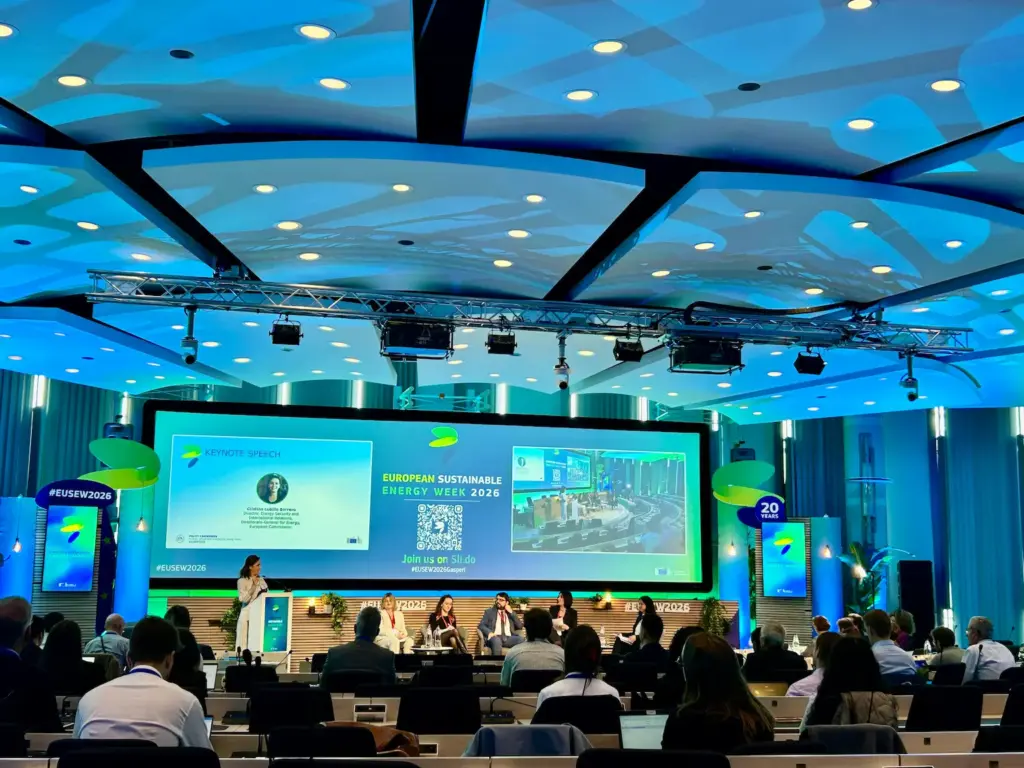
European Sustainable Energy Week 2026 highlighted how closely energy security, competitiveness, clean energy and geopolitical resilience are connected. The EUSEW Policy Conference and Energy Fair provided a useful platform for connecting policy, industry and project actors around Europe’s clean energy future.
A major part of the discussion focused on REPowerEU, the phase-out of Russian energy, diversification of supply, renewable gases, energy efficiency and Europe’s long-term clean energy transition.
The key message was clear: energy policy is no longer only a climate topic. It is also a security, competitiveness and industrial policy issue.
Since Russia’s full-scale invasion of Ukraine, Europe has had to rethink its energy dependencies. The phase-out of Russian gas and fossil fuels is not only a political commitment; it is also an economic and strategic necessity. Discussions at EUSEW underlined that implementation, transparency and enforcement are as important as political declarations.
Several concrete issues were raised: the need to fully phase out Russian energy imports, the importance of monitoring and enforcement across Member States, the risk of indirect imports through third countries, the role of customs authorities and documentation, diversification of supply, renewable gases, biomethane, energy efficiency and demand reduction.
This has direct relevance for EU-funded projects. Clean energy projects are no longer only expected to contribute to climate targets. They are also expected to strengthen resilience, reduce dependencies, support industrial competitiveness and create practical pathways for deployment.
For Horizon Europe, LIFE, the Innovation Fund and clean industrial calls, successful proposals should show how solutions contribute to several objectives at once: decarbonisation, energy security, industrial competitiveness, resilience, stakeholder acceptance, market uptake and policy implementation.
This is where communication, dissemination and exploitation become essential. Clean energy projects often involve complex stakeholder landscapes: industry, municipalities, citizens, regulators, investors, infrastructure operators and technology providers. If these stakeholders are not engaged properly, even strong technical solutions may struggle to scale.
5. Ukraine is part of Europe’s resilience discussion
The energy discussions also showed that Ukraine is not only a recipient of support. Ukraine is increasingly part of Europe’s wider resilience, energy security and reconstruction discussion.
Ukraine’s energy infrastructure, storage capacity, renewable potential and reconstruction needs are strongly connected to Europe’s future energy architecture. This links directly with broader EU support for Ukraine and the need to connect resilience with practical investment and innovation cooperation. Relevant policy context can be followed through the European Commission’s EU solidarity with Ukraine information pages.
Discussions around gas storage, renewable gases, energy security and diversification point to future areas where EU-Ukraine cooperation can become more strategic.
Ukraine can contribute through research organisations and universities, innovative SMEs, energy and infrastructure actors, regional and municipal authorities, digital and engineering expertise, reconstruction-related pilots and renewable energy and resilience projects.
At the same time, Ukrainian organisations often need stronger integration into European consortia, better visibility, clearer partner positioning and support in connecting their expertise with EU funding instruments.
For Nexuswelt, this is an important strategic direction. Through Nexuswelt Ukraine, we aim to support practical cooperation between Ukrainian organisations and European partners, especially in areas such as Horizon Europe, Digital Europe, clean energy, resilience, reconstruction, stakeholder engagement and impact.
6. Research and Technology Organisations are key to deployment
The EARTO Annual Conference highlighted the role of Research and Technology Organisations in Europe’s innovation ecosystem.
RTOs are essential because they connect scientific knowledge, applied research, industry needs and technology deployment. The work of networks such as EARTO is important for strengthening Europe’s applied research base and translating research results into industrial and societal value.
For Europe’s competitiveness, this role is becoming even more important. Many European priorities require applied research and testing capacities: clean technologies, semiconductors, advanced manufacturing, AI, industrial decarbonisation, mobility, energy systems, digital infrastructure and deep tech.
The conference discussions showed that Europe needs stronger links between research, industry and policy. Innovation does not move from laboratory to market automatically. It needs validation, technology transfer, partnerships, funding, stakeholder engagement and exploitation planning.
For Horizon Europe consortia, this means that RTOs can be valuable partners not only for technical work, but also for demonstration, validation, pilot activities and technology uptake.
At the same time, RTOs also need strong communication, dissemination and exploitation strategies. Their results must be visible, understandable and connected to industry, policymakers, SMEs and future users.
This is an area where Nexuswelt’s experience in EU project communication, exploitation, impact strategy and stakeholder engagement can create value.
7. SMEs need more than funding
The SME Connect / Mastercard Strive EU discussions focused on Europe’s small business future, innovation, partnership and growth. SME Connect describes itself as a network and communication platform for SMEs through smeconnect.eu, while Mastercard Strive EU focuses on supporting micro and small businesses through digital and innovation-related support.
One important message was that SMEs need more than financial support. Funding is important, but it is not enough on its own.
SMEs also need trusted networks, access to finance, digital tools, cybersecurity support, business development opportunities, ecosystem partnerships, visibility, skills, mentoring and support for scaling across borders.
The discussions around Mastercard Strive EU also highlighted the role of public-private cooperation in supporting Europe’s micro- and small businesses. This is particularly important in areas such as AI, cybersecurity, sustainability, embedded finance and SME resilience.
For EU projects, this is a strong reminder that SME involvement should be practical and meaningful. SMEs should not be included in consortia only to meet a formal requirement. They should have a clear role, visible benefits and access to exploitation opportunities.
EU-funded projects can support SMEs by creating practical tools, pilot environments, market access pathways, stakeholder networks and communication channels that continue beyond the project lifetime.
8. What this means for future EU-funded projects
- Consortia need to be more strategic. The strongest projects will be those that bring together technology, policy understanding, market knowledge, user engagement and communication from the beginning.
- Implementation must be planned early. It is not enough to produce deliverables. Projects need clear pathways for adoption, exploitation and long-term use.
- Communication must be connected to impact. Visibility is important, but communication should also support stakeholder engagement, policy uptake, user trust and market readiness.
- SMEs need practical value. If SMEs are part of a project, they should benefit from real cooperation, visibility, tools, networks or business opportunities.
- Energy and digital resilience are cross-cutting priorities. Future projects should show how they contribute to security, competitiveness and strategic autonomy, not only innovation in a narrow technical sense.
- Ukraine should be considered as a strategic partner. This is especially relevant in energy resilience, reconstruction, digital transformation, clean technologies and regional development.
9. Nexuswelt’s role as an EU funding and innovation partner
For Nexuswelt, this Brussels week confirmed our strategic direction.
We support EU-funded innovation projects not only with communication and dissemination, but also with proposal and consortium support, exploitation, impact strategy, stakeholder engagement, project visibility and long-term positioning.
Our work focuses on helping consortia connect policy priorities with practical implementation. This includes:
- proposal and consortium support
- communication and dissemination strategies
- exploitation and sustainability planning
- impact pathways and KPI monitoring
- stakeholder mapping and engagement
- project visibility and storytelling
- social media and content strategy
- policy and market positioning
- EU-Ukraine cooperation support
- support for Horizon Europe, Digital Europe, Chips JU, LIFE and other EU programmes
The discussions in Brussels showed that Europe’s innovation ecosystem needs exactly this kind of bridge: between policy and practice, research and market, SMEs and consortia, technical results and stakeholder uptake.
Related Nexuswelt support:
For organisations preparing Horizon Europe, Digital Europe, clean energy or EU innovation proposals, Nexuswelt supports proposal writing and strategic proposal support, Horizon Europe project support, Digital Europe proposal writing and application support, and impact-oriented project communication, dissemination and visibility.
Conclusion
Brussels week 2026 showed that Europe is moving into a new phase of innovation policy.
The focus is no longer only on setting strategies. The key question is how to implement them.
AI governance, clean energy, industrial transformation, SME innovation, applied research and energy security all point in the same direction: Europe needs stronger cooperation, faster uptake, better communication, trusted ecosystems and more practical pathways from project results to real-world impact.
For EU-funded projects, this means that success will increasingly depend on consortia that can combine technical excellence with stakeholder engagement, exploitation, communication and implementation capacity.
Nexuswelt will continue supporting partners, SMEs, research organisations and innovation actors in building this bridge – from EU funding opportunities to visible, useful and sustainable project impact.
Call to action
If your organisation is preparing a Horizon Europe, Digital Europe, LIFE, Chips JU or clean innovation proposal and is looking for a partner for communication, dissemination, exploitation, impact strategy, stakeholder engagement or EU-Ukraine cooperation, Nexuswelt would be glad to connect.
Contact Nexuswelt to explore cooperation opportunities for future EU-funded projects: nexuswelt.com
#HorizonEurope #DigitalEurope #EUSEW2026 #EARTOAC2026 #CleanIndustrialDeal #EUInnovation #ResearchAndInnovation #CleanEnergy #AIAct #EnergySecurity #SMEInnovation #IndustrialTransformation #TechnologyTransfer #EuropeanInnovation #EUProjects #Nexuswelt