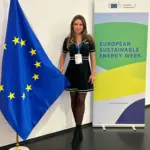
This article is written as a strategic website blog for Nexuswelt, based on participation in the EU Digital Summit 2026 in Brussels, the ServiceNow side session on AI regulation implementation, the Mastercard Strive EU / SME Connect evening discussion, personal notes and event recordings. Links are embedded organically in the article text for WordPress publication and SEO.
EU Digital Summit 2026: AI Governance, Digital Resilience and Europe’s Implementation Challenge
In June 2026, Nexuswelt joined the EU Digital Summit 2026 in Brussels, organised by European Business Summits. The summit took place at a decisive moment for Europe’s digital policy agenda. After years of legislation on artificial intelligence, data, platforms, cybersecurity and digital markets, the main question is no longer whether Europe has rules. The real question is how these rules can be implemented in a way that strengthens competitiveness, trust, productivity and innovation.
For organisations working with Horizon Europe, Digital Europe, AI-based solutions, cybersecurity, data governance, SME digital transformation and EU-funded innovation projects, this shift is highly relevant. Regulation is becoming more practical. Compliance is becoming more operational. And digital transformation is increasingly linked with resilience, strategic autonomy and market uptake.
One of the most relevant sessions was “AI Regulations are clear: now the era of implementation has begun”, powered by ServiceNow. The session focused on a very practical question: as AI becomes more autonomous, how can public and private organisations stay in control while meeting the requirements of the EU AI Act, NIS2 Directive and DORA?
Announced speakers for the AI implementation session included Lucilla Sioli, Director of the European AI Office at DG CNECT, European Commission; Combiz Abdolrahimi, Global Head of Government Affairs and Public Policy at ServiceNow; Wesley Bille, Partner at Deloitte; Willem-Jan Cosemans, Director at Deloitte Legal; and Timothy Martens, Risk and Security Leader at ServiceNow. The discussion was especially useful because it moved beyond general AI policy and focused on governance, visibility, identity, risk management and accountability.
The summit also connected to the Mastercard Strive EU / SME Connect evening reception on Europe’s small business future, innovation, partnership and growth. This brought an important SME perspective into the wider digital policy debate: digital regulation and AI governance will only succeed if micro, small and mid-sized companies can translate complex requirements into workable processes and real business value.
1. From digital ambition to implementation
The official EU Digital Summit 2026 framing described Europe as entering a decisive implementation phase: turning the EU digital rulebook into real-world outcomes for competitiveness, investment, productivity and trust. This is a strong message for the EU project ecosystem. The challenge is no longer only to design policies or launch pilots. The challenge is to make digital solutions scalable, trusted, compliant and useful.
Across the sessions and discussions, one message stood out clearly: Europe has strong digital strategies, but implementation will determine whether these strategies create impact. Implementation requires more than legal awareness. It requires governance structures, technical processes, organisational responsibilities, documentation, skills, user trust, stakeholder engagement and market readiness.
For EU-funded projects, this means that digital transformation cannot be treated as a purely technical work package. Projects involving AI, data, platforms, cybersecurity, cloud, digital services or automation need to connect technology with regulation, ethics, communication, exploitation and user adoption from the beginning.
2. AI governance is moving from policy to practice
The European Commission’s AI policy framework is built around the dual objective of promoting excellence and trust. In practical terms, this means supporting research, industrial capacity and AI adoption while also protecting safety, fundamental rights and legal certainty. The EU Digital Summit made clear that this balance is now moving from the policy level into organisational practice.
The most important takeaway from the AI regulation discussions is that companies and public organisations need internal AI governance, not only general awareness of the AI Act. Organisations increasingly need to know which AI systems they use, who is responsible for them, what data they access, what risks they create and how decisions or outputs are monitored.
Key governance questions for organisations include:
- Who is responsible for AI governance inside the organisation?
- Which AI tools are being used, purchased, integrated or tested?
- Which systems involve generative AI, general-purpose AI or agentic AI?
- How are AI-related risks documented, assessed and mitigated?
- How are transparency, accountability and human oversight organised?
- How are AI governance and cybersecurity connected?
- How can teams innovate without losing control over compliance and trust?
This is directly relevant for Horizon Europe and Digital Europe projects. Many projects already use AI for decision support, analytics, automation, user interaction, forecasting, optimisation, digital twins or communication workflows. If these solutions are expected to move closer to market, the consortium must also be able to explain how they are governed and why users, regulators and stakeholders can trust them.
3. The European AI Office and the AI Act Service Desk are becoming practical reference points
The European AI Office plays a central role in supporting AI Act implementation, especially for general-purpose AI models. For organisations trying to understand obligations and implementation pathways, the Commission’s AI Act Service Desk is also becoming an important practical reference point.
This matters because many organisations still experience AI regulation as fragmented or abstract. They know the AI Act exists, but they are less clear about what it means for day-to-day processes, internal responsibilities, procurement, documentation or project design. The summit discussions reflected this transition: the policy framework is becoming clearer, but organisations now need operational models.
For EU-funded projects, the practical implication is simple: AI governance should not wait until the exploitation phase. It should be included already during proposal design, ethics preparation, data management planning, stakeholder analysis and communication strategy. This is especially important for projects that involve public services, SMEs, critical infrastructure, health, mobility, energy, finance, manufacturing or citizen-facing digital tools.
4. General-purpose AI and agentic AI create new governance needs
Your recording from the AI regulation session highlighted several references to general-purpose AI, generative AI, models, providers, documentation, codes of practice and the need to stay up to date as the framework evolves. This reflects a wider challenge: AI systems are becoming more capable and more embedded in organisational workflows.
General-purpose AI and generative AI are different from traditional software tools because they can be applied across many tasks, sectors and workflows. This makes governance more complex. Organisations may use AI tools for drafting, coding, analysis, customer support, compliance checks, risk management, reporting, research or internal productivity. In many cases, these tools enter organisations faster than formal governance processes can adapt.
Agentic AI increases the challenge even further. When AI systems can trigger workflows, access data, support decisions or interact with other systems, organisations need stronger visibility and identity foundations. They need to know what the AI can access, what it can change, which human remains accountable and how incidents are detected.
For EU projects, this means that technical development must be accompanied by governance-by-design. Consortia should consider AI system mapping, data access, model use, risk mitigation, user instructions, documentation, human oversight and escalation processes as part of the project architecture.
5. Digital resilience is becoming a competitiveness factor
The summit discussions also connected AI governance with wider digital resilience. This includes cybersecurity, cloud infrastructure, identity management, business continuity, payment systems, data governance and operational resilience. The relevance of the NIS2 Directive and Digital Operational Resilience Act was clear in this context.
Digital resilience is no longer only an IT department issue. It is becoming a board-level and competitiveness issue. If European companies want to scale digital solutions, they must also protect systems, data, users and operations. The discussions around cybersecurity, payments and cloud capacity showed that resilience and competitiveness are closely connected.
One important insight from the recordings was the tension between strategic autonomy and market reality. Europe wants to reduce dependencies and build more resilient European digital infrastructure. At the same time, competitiveness depends on scale, technical capacity, user experience and the ability to withstand real cyber threats. Policy alone will not make a solution competitive; it must also work for users, businesses and markets.
For EU-funded digital projects, this is a strong message. Projects should not focus only on technical novelty. They also need to demonstrate reliability, cybersecurity, usability, interoperability, scalability, business continuity and user trust.
6. Digital Europe and Horizon Europe projects need stronger implementation pathways
The Digital Europe Programme is designed to support the deployment and use of digital capacities across Europe. Horizon Europe, meanwhile, supports research and innovation, including AI, data, cybersecurity, industry, energy, mobility and digital transformation. The EU Digital Summit showed that the boundary between policy, research, deployment and market uptake is becoming increasingly important.
A strong EU-funded digital project should therefore answer not only “what technology are we developing?”, but also:
- Who will use the solution and why?
- How does the solution comply with relevant digital regulation?
- How will trust, transparency and cybersecurity be addressed?
- How will SMEs and end users be supported?
- How will results be communicated to the right stakeholders?
- How will exploitation and long-term adoption continue after the project?
- How does the project contribute to European competitiveness and digital resilience?
This is where project communication, dissemination, exploitation and impact strategy become essential. They are not cosmetic activities. They help translate project results into stakeholder understanding, user trust, policy relevance and market uptake.
7. SMEs need practical digital support, not only regulation
The Mastercard Strive EU / SME Connect discussions added an important SME perspective. Micro and small businesses are expected to digitalise, use AI, strengthen cybersecurity, improve resilience and remain competitive, but many do not have large internal legal, IT or compliance teams.
This creates a practical gap. SMEs need clear guidance, trusted ecosystems, access to finance, digital tools, cybersecurity support, partnerships and implementation-oriented assistance. They need to understand not only what regulation requires, but also how digital tools can create real value for their business.
For EU projects, SME engagement must therefore be meaningful. SMEs should not be included only as target groups in communication campaigns. They should be involved as users, testers, pilots, validators, innovation partners, dissemination multipliers and exploitation stakeholders.
Digital innovation projects that want to support SMEs should focus on practical outputs: easy-to-use tools, templates, training, matchmaking, business support, market access, cybersecurity guidance and clear value propositions. Without this, the distance between policy ambition and SME reality will remain too large.
8. What this means for communication, dissemination and exploitation
The EU Digital Summit confirmed a point that is highly relevant for Nexuswelt’s work: digital innovation needs strong implementation communication. It is not enough to publish news about project activities. EU-funded projects must explain why their results matter, who should use them, how they address risks and how they connect to wider EU policy priorities.
In AI and digital projects, communication and exploitation should help answer questions such as:
- How does the project contribute to trustworthy AI or digital resilience?
- Which stakeholders need to understand, validate or adopt the solution?
- How can users be informed about risks, benefits and safeguards?
- How can technical results be translated into policy, business and market language?
- How can dissemination support trust, not only visibility?
- How can exploitation planning address regulation, compliance and adoption barriers?
This is especially important when projects involve sensitive technologies, data-driven services, automation, cybersecurity, AI models or digital public infrastructure. Trust must be built through clear messaging, credible evidence, stakeholder engagement and transparent communication.
9. Nexuswelt’s role in EU digital innovation projects
For Nexuswelt, the EU Digital Summit 2026 confirmed the importance of connecting EU digital policy with practical project implementation. Our role is to support EU-funded innovation projects not only with visibility, but also with proposal support, consortium positioning, communication, dissemination, exploitation, impact strategy and stakeholder engagement.
In digital and AI-related projects, this can include:
- proposal and consortium support for Horizon Europe and Digital Europe projects
- communication and dissemination strategies for AI, data and digital innovation projects
- exploitation planning and market-oriented positioning
- stakeholder mapping and engagement for SMEs, public actors and innovation ecosystems
- impact pathways and KPI monitoring
- content strategy around AI governance, digital transformation and regulatory implementation
- support for EU-Ukraine and cross-border digital cooperation where relevant
The future of European digital innovation will depend on more than regulation and funding. It will depend on the ability to build trusted ecosystems, communicate complexity clearly, support SMEs practically and move from pilots to scalable implementation.
Related Nexuswelt support:
For organisations preparing AI, digital resilience or Digital Europe projects, Nexuswelt supports Digital Europe proposal writing and application support, Horizon Europe project support, and impact-oriented project communication, dissemination and visibility for EU-funded digital innovation projects.
Conclusion: the era of implementation has begun
The EU Digital Summit 2026 showed that Europe’s digital agenda is entering a new phase. The discussion is no longer only about ambition, regulation or experimentation. It is about implementation.
AI governance, digital resilience, cybersecurity, data infrastructure, payment systems, SME digitalisation and strategic autonomy are now deeply connected. Europe’s competitiveness will depend on whether organisations can turn digital rules and policy priorities into practical, trusted and scalable solutions.
For EU-funded projects, this creates a clear direction: digital innovation must be designed with governance, trust, communication, exploitation and stakeholder uptake from the beginning. This is where strong consortia and implementation-focused project partners can create real added value.
If your organisation is preparing a Horizon Europe, Digital Europe or AI-related proposal and is looking for a partner for communication, dissemination, exploitation, impact strategy, stakeholder engagement or EU digital innovation positioning, Nexuswelt would be glad to connect.
#EUDigitalSummit #DigitalEurope #AIAct #AIRegulation #AIGovernance #GenerativeAI #DigitalTransformation #Cybersecurity #DigitalResilience #SMEInnovation #EuropeanInnovation #EUInnovation #HorizonEurope #EUProjects #ImpactStrategy #Exploitation #Nexuswelt