EIC Summit 2026: what the future of European innovation funding means for startups, scaleups and deep-tech companies
The EIC Summit 2026 in Brussels sent a very clear signal to Europe’s innovation ecosystem: the next phase of European competitiveness will not be decided only by how many startups Europe can create. It will be decided by how effectively Europe can finance, scale and keep its most promising breakthrough companies in Europe.
For Nexuswelt, the Summit was especially relevant because the discussions connected three topics that increasingly define the future of EU innovation funding: the future of the European Innovation Council after 2028, the launch of the Scaleup Europe Fund, and the mobilisation of institutional capital through the Savings and Investments Union.
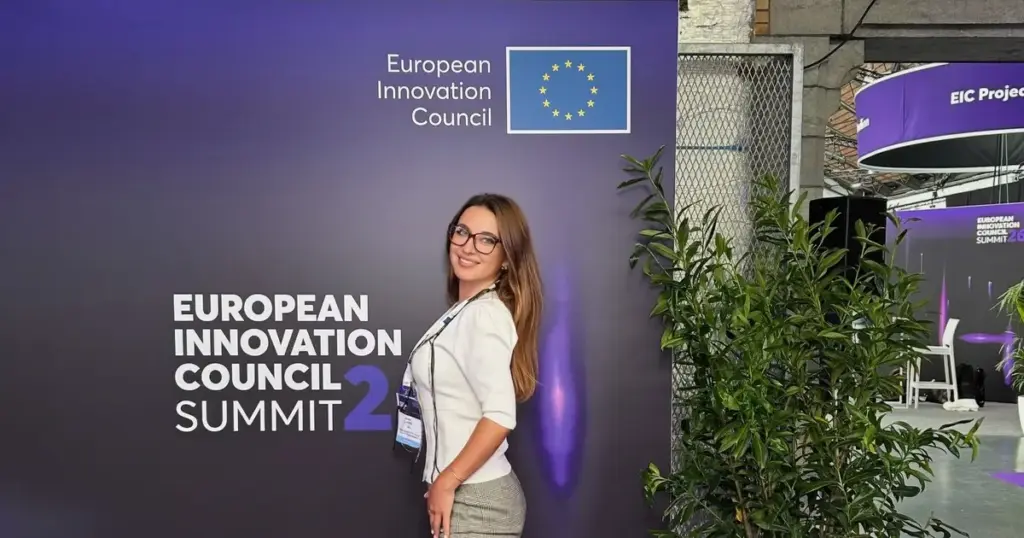
Official Summit information is available on the EIC Summit 2026 page. The Summit brought together leading voices from European policy, finance, research, startups, scaleups, corporates and investment, with a strong focus on networking, investment readiness, technology transfer and scaleup growth.
Why this Summit matters now
The timing of the discussions is important. The next Multiannual Financial Framework will start after 2027, and the European Commission, the European Parliament and the wider innovation ecosystem are already discussing what the next generation of EU innovation instruments should look like.
The key question is no longer whether Europe should support breakthrough innovation. That has already been accepted. The more strategic question is how Europe can build a full growth pathway from research excellence to commercialisation, scaleup financing, industrial deployment and global competitiveness.
This is where the EIC becomes more than a funding programme. It is increasingly positioned as a strategic European instrument for high-risk, high-potential innovation, especially in areas where private investors may not yet be ready to carry the full risk alone.
Core outcome: Europe is moving from funding innovation to scaling innovation
One of the strongest outcomes from the Summit is the shift in language and priorities. Europe is no longer discussing only how to fund innovation projects. It is discussing how to turn innovation into companies, markets, industrial leadership and technological sovereignty.
This distinction is important for startups, SMEs and research-driven companies. A grant can support one stage of development, but it cannot by itself create a global leader. Companies need a sequence of instruments and partnerships: research funding, validation funding, market-entry support, investment readiness, equity, follow-on investment, industrial customers, growth capital and access to integrated capital markets.
For companies preparing their future funding strategies, the EIC should therefore be understood not only as an application opportunity, but as part of a broader European growth roadmap.
Key speaker insights from the EIC Summit discussions
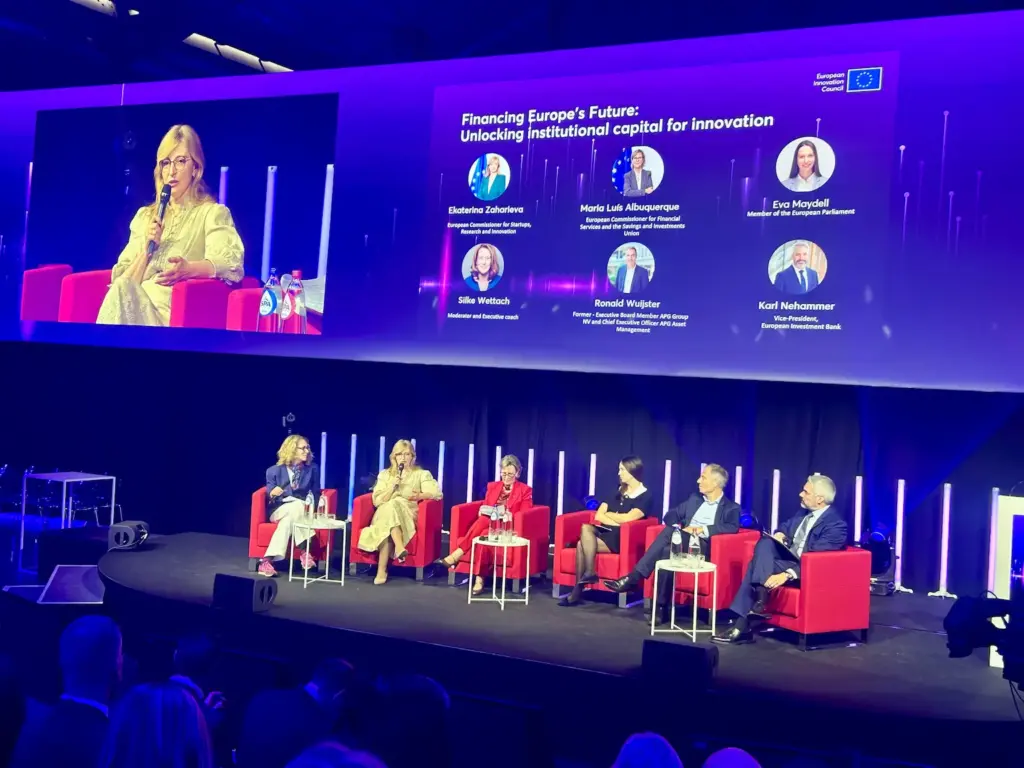
The following points summarise the most relevant insights from the two discussions covered in Nexuswelt’s conference notes: the future of the EIC and the financing of Europe’s scaleup ecosystem.
Christian Ehler: Europe must be ready to take strategic risk
Christian Ehler, Member of the European Parliament, strongly framed the EIC as a market-facing instrument that needs political backing, operational independence and a higher tolerance for risk. His intervention was especially relevant because it addressed one of the core tensions in public innovation finance: public money must be accountable, but breakthrough innovation cannot be managed with a zero-failure mindset.
The strategic takeaway is clear: if Europe wants leaders in quantum technologies, artificial intelligence, semiconductors, biotech, medical technologies, clean technologies, space and advanced manufacturing, it must accept that not every supported company will succeed. Portfolio logic is normal in innovation finance. The question is whether the successful companies create enough technological, economic and strategic value for Europe.
Marc Lemaître: the EIC must scale without becoming bureaucratic
Marc Lemaître, Director-General of DG Research and Innovation, highlighted the importance of improving speed, decision-making and the way the best companies are selected. One of the central concerns was avoiding bureaucratisation as the EIC grows.
This is a crucial point. If the EIC receives a larger future budget, it cannot simply become a bigger version of the same administrative model. The future EIC will need stronger operational capacity, market orientation, commercialisation expertise and the ability to act faster in areas where global competition is moving quickly.
Anita Krohn: the EIC has proven the need and now enters its own scaleup phase
Anita Krohn, EIC Board Member and CEO of DSD AS Group, framed the EIC almost like a startup entering its own scaleup phase. The pilot phase proved that a real gap existed. The current Horizon Europe phase has built momentum. The next phase must be about scaling the EIC’s operations, impact and ability to support companies through the difficult journey from technology to market.
This is a very useful way for companies to understand the moment. The EIC is no longer experimental. It has shown that Europe needs a dedicated mechanism for breakthrough innovation. The next challenge is whether the instrument itself can grow fast enough to support the companies it helped create.
Andreas Schwarz: the future of the EIC is already part of the next EU budget discussion
Andreas Schwarz, Head of Cabinet for Commissioner Ekaterina Zaharieva, moderated and framed the future EIC discussion in the context of the next financial framework. This matters because the future shape of the EIC after 2028 will not only be a technical question. It will be a strategic political and budgetary question about Europe’s innovation ambitions.
For startups and scaleups, this means that the coming years will be important for monitoring how EIC instruments evolve and how future funding, equity and scaleup financing pathways are structured.
Ekaterina Zaharieva: scaling European innovation is a competitiveness issue
Ekaterina Zaharieva, European Commissioner for Startups, Research and Innovation, placed the scaleup challenge in the wider context of European competitiveness. The message from the financing discussion was that Europe has strong science, strong talent and strong industrial capacities, but these strengths must be connected with long-term capital and market growth.
This is highly relevant for deep-tech companies because their growth is often linked to strategic sectors where Europe wants to reduce dependency, build industrial strength and keep technological value in Europe.
Maria Luís Albuquerque: Europe has savings, but they must flow into productive investment
Maria Luís Albuquerque, European Commissioner for Financial Services and the Savings and Investments Union, connected innovation finance with the broader challenge of fragmented European capital markets. The Savings and Investments Union is designed to help channel European savings into productive investment and improve the financing ecosystem for companies.
The European Commission describes the Savings and Investments Union as a policy agenda to connect savings and productive investments, while also supporting competitiveness. More information is available on the official Savings and Investments Union page.
Eva Maydell: European institutions also need to become more outcome-oriented
Eva Maydell, Member of the European Parliament, brought an important institutional perspective. A key message was that Europe should measure success less by the number of files adopted and more by outcomes delivered. For companies, this matters because administrative processes, fragmented rules and slow implementation can directly influence whether a startup stays in Europe or looks elsewhere for growth.
The practical implication is that future EU innovation policy must be evaluated by its real-world impact: more companies scaling, more private capital mobilised, more technologies reaching the market and more value remaining in Europe.
Karl Nehammer: the EIB Group can help turn ambition into action
Karl Nehammer, Vice-President of the European Investment Bank, positioned the EIB Group as a key implementation partner for European competitiveness. The EIB and EIF can play a strategic role in crowding in private capital, supporting deployment and helping policy priorities become investment reality.
For companies, this confirms that future EU innovation finance will not rely only on grants. It will increasingly combine public instruments, investment structures, EIB/EIF mechanisms and private capital.
Ronald Wuijster: institutional investors can support innovation if structures are credible
Ronald Wuijster, former Executive Board Member at APG Group and former CEO of APG Asset Management, brought a practical institutional investor perspective. Pension funds and institutional investors have fiduciary duties and cannot behave like ordinary venture funds. However, they can participate in innovation finance through professional vehicles, diversified portfolios, strong fund managers and well-designed risk-sharing structures.
This message is important because institutional capital is one of the missing pieces in European scaleup financing. If pension funds, insurance companies and long-term investors become more active, the scaleup gap can be addressed more seriously.
Christian Sinding and EQT: the Scaleup Europe Fund should become more than capital
The Scaleup Europe Fund was another major point of attention. EQT has been selected as preferred investment adviser and fund manager for the Fund. According to EQT’s announcement, Ted Persson and Victor Englesson are proposed as Co-Heads of the Scaleup Europe Fund Advisory Team, while Christian Sinding, Institutional Partner at EQT, is proposed as Chair of the Investment Committee. The strategy will focus on privately owned European technology companies from Series B onward and will draw on EQT’s broader platform, including AI-driven sourcing, corporate offtake partnerships and industrial advisors. See EQT’s announcement here: EQT selected to lead the Scaleup Europe Fund.
For companies, this is strategically important because the Fund is not only about additional capital. It is designed to strengthen a broader growth ecosystem around European technology scaleups, including corporate partnerships, talent networks and public-private collaboration.
The future of the EIC after 2028: what could change?
The discussion on the future of the EIC pointed to several directions that companies should follow closely.
- A stronger EIC budget may become part of the next Multiannual Financial Framework discussion.
- The EIC may need more independence and market-facing capacity to act effectively as a strategic innovation investor.
- Speed, flexibility and operational capacity will become critical if the EIC is expected to support more companies at scale.
- Risk-taking will need to be politically accepted as part of a serious breakthrough innovation portfolio.
- Commercialisation, investment readiness and follow-on capital may become more integrated into the EIC pathway.
- The EIC may increasingly connect with other instruments such as STEP Scale Up, the Scaleup Europe Fund, EIB/EIF mechanisms and private investors.
The practical conclusion for companies is that the future EIC will likely reward not only scientific excellence and technological novelty, but also strategic market thinking, credible commercialisation, strong execution capacity and European added value.
EIC funding instruments: how the growth pathway fits together
The official EIC 2026 Work Programme opened funding opportunities worth over EUR 1.4 billion for strategic technologies and scaling up companies. It includes EIC Pathfinder, EIC Transition, Advanced Innovation Challenges and EIC Accelerator. The official page is available here: EIC 2026 Work Programme.
EIC pathway for companies
Instrument | What companies should prepare |
EIC Pathfinder | Scientific excellence, breakthrough potential, long-term technology vision |
EIC Transition | Technology validation, business model, IP strategy, exploitation pathway |
EIC Accelerator | Investment readiness, go-to-market plan, team, traction, financial model |
STEP Scale Up / EIC Fund-related instruments | Large investment need, strategic technology fit, growth roadmap |
Scaleup Europe Fund | European anchoring, scaleup ambition, strong governance, major funding round readiness |
Scaleup Europe Fund: why it matters for European deep tech
The official EIC page explains that many innovative European companies face challenges accessing the capital needed to scale and become global leaders in Europe. It also notes that no fund of comparable size currently provides direct equity investments in European strategic technology companies at the growth and scaleup stages. More details are available on the official Scaleup Europe Fund page.
The Fund targets companies located in, or intending to locate to, EU Member States or countries associated with Pillar III of Horizon Europe, developing strategic technologies and seeking major investment amounts at growth and scaleup stages.
Strategic technologies listed by the EIC include artificial intelligence, quantum technologies, semiconductor technologies, robotics and autonomous systems, energy technologies, space technologies, biotechnologies, medical technologies, advanced materials and agritech.
The EIC page also explains that the Scaleup Europe Fund aims to provide significant capital to companies at growth and scaleup stage, including investment amounts in the range of EUR 100 million and above, including follow-on investments. First investments are expected in autumn 2026.
For companies, this means that the European funding landscape is becoming more layered. A deep-tech company may start with research funding, move through validation and market entry instruments, and later become relevant for growth capital if it can demonstrate strong strategic fit, governance, market traction and scalability.
Institutional capital: why pension funds, insurance companies and corporates matter
A major outcome from the financing discussion was that Europe has capital, but too much of it is not yet connected to innovation. The issue is not simply lack of money. The issue is fragmentation, risk perception, regulatory complexity, limited cross-border capital flows and the absence of sufficiently large, trusted investment structures for scaleup finance.
This is why institutional capital is so important. Pension funds, insurance companies, banks, foundations, corporates and long-term investors can bring patient capital and scale. However, they require credible vehicles, professional fund management, diversified risk, strong governance and a clear investment logic.
The Savings and Investments Union, the Capital Markets Union agenda, the EIB Group, the EIF and the Scaleup Europe Fund are all part of this broader conversation. Together, they point toward a more integrated European innovation finance architecture.
What companies should do now: practical planning checklist
The EIC Summit outcomes are not only relevant for policymakers. They are directly relevant for companies planning their funding and growth strategy. The following checklist can help startups, SMEs and deep-tech teams prepare.
- Map the company stage: research, validation, market entry, early traction, scaling or growth capital.
- Identify whether EIC Pathfinder, EIC Transition, EIC Accelerator, STEP Scale Up or future scaleup financing instruments are most relevant.
- Strengthen the commercialisation story early, including market need, customers, competition, IP, business model and go-to-market plan.
- Prepare an investment-readiness package, not only a grant proposal: pitch deck, financial model, milestones, use of funds, governance and team credibility.
- Develop a clear European growth narrative: why the company should scale in Europe, which markets it will address and how it contributes to competitiveness.
- Connect EU funding with exploitation and impact planning, especially for companies emerging from Horizon Europe or collaborative research projects.
- Monitor the next Multiannual Financial Framework and future EIC changes after 2028.
- Follow the Scaleup Europe Fund development, especially if the company is in strategic technologies and approaching Series B or later growth rounds.
What this means for Nexuswelt and our clients
For Nexuswelt, the EIC Summit 2026 confirmed a strategic direction that is already highly relevant for our work with innovative SMEs, deep-tech startups, EU-funded projects and international partners.
The future of EU innovation funding will require more than writing strong proposals. Companies will need a combined funding, commercialisation and scaleup strategy. They will need to understand which instrument fits which stage, how to prepare for EIC opportunities, how to communicate European added value, how to develop exploitation pathways and how to become credible for follow-on investment.
This is where Nexuswelt can support companies and consortia: through EU funding strategy, proposal development, dissemination and communication, exploitation planning, impact strategy, stakeholder engagement, investment-readiness positioning and market-oriented project communication.
The EIC, the Scaleup Europe Fund and related EU instruments can become strategic options for innovative SMEs and deep-tech companies planning growth in Europe. They are not relevant for every company, but for the right profile they should be considered early in the growth roadmap.
Nexuswelt perspective: the shift companies should not miss
The most important strategic shift is this: European innovation funding is moving closer to the market.
Scientific excellence remains essential. Technological novelty remains essential. But future success will increasingly depend on the ability to show credible market relevance, investment logic, scaleup potential, European competitiveness and long-term impact.
For companies, this means that grant writing and business strategy can no longer be separated. A strong EIC proposal needs a strong company logic behind it. A strong scaleup strategy needs a credible technology and market pathway. A strong EU-funded project needs a convincing exploitation plan that shows how results can move beyond the project lifetime.
Key outcomes from the EIC Summit 2026
- The EIC has proven that there is a real market gap for high-risk, high-potential innovation support in Europe.
- The next challenge is scaling the EIC itself after 2028, both in budget and operational capacity.
- A stronger EIC budget would be a strategic competitiveness signal, not only an increase in grants.
- Speed, flexibility and market orientation are essential if Europe wants to compete globally.
- Risk-taking must become more accepted in public innovation finance.
- The Scaleup Europe Fund is a major signal that Europe wants to build larger growth-capital structures for strategic technology companies.
- Institutional capital must become part of the scaleup equation, including pension funds, insurance companies, banks, corporates and foundations.
- The Savings and Investments Union is directly connected to innovation because it aims to channel European savings into productive investment.
- Companies should look at the EIC not only as a funding call, but as a wider roadmap from research to market and scaleup growth.
- Investment readiness, commercialisation and European growth strategy will become even more important for deep-tech companies and innovative SMEs.
Related Nexuswelt support:
For startups, SMEs and deep-tech companies exploring EIC funding, Horizon Europe opportunities or European scale-up pathways, Nexuswelt supports Horizon Europe project support, proposal writing and strategic proposal support, and impact-oriented project communication, dissemination and visibility.
Conclusion: Europe is building a more complete innovation finance system
The EIC Summit 2026 showed that Europe is entering a new phase of innovation policy. The central question is no longer only how to support innovation. The question is how to finance it, scale it, keep it in Europe and turn it into competitiveness.
This is a major shift for startups, SMEs and deep-tech companies. It creates new opportunities, but also higher expectations. Companies that want to benefit from future EIC and scaleup instruments will need to be technically excellent, commercially credible and strategically prepared.
For Nexuswelt, this confirms the importance of helping companies connect EU funding with real growth pathways. Europe has the science, the talent, the industrial base and the financial ambition. The next step is to connect these elements faster and more effectively.
That is where the future of European innovation will be decided.
Useful official and relevant links
- European Innovation Council
- EIC Summit 2026
- EIC Summit 2026 speakers
- EIC funding opportunities
- EIC 2026 Work Programme
- EIC Pathfinder
- EIC Transition
- EIC Accelerator
- STEP Scale Up
- Scaleup Europe Fund
- EQT selected to lead the Scaleup Europe Fund
- Savings and Investments Union
- European Investment Bank
- European Investment Fund