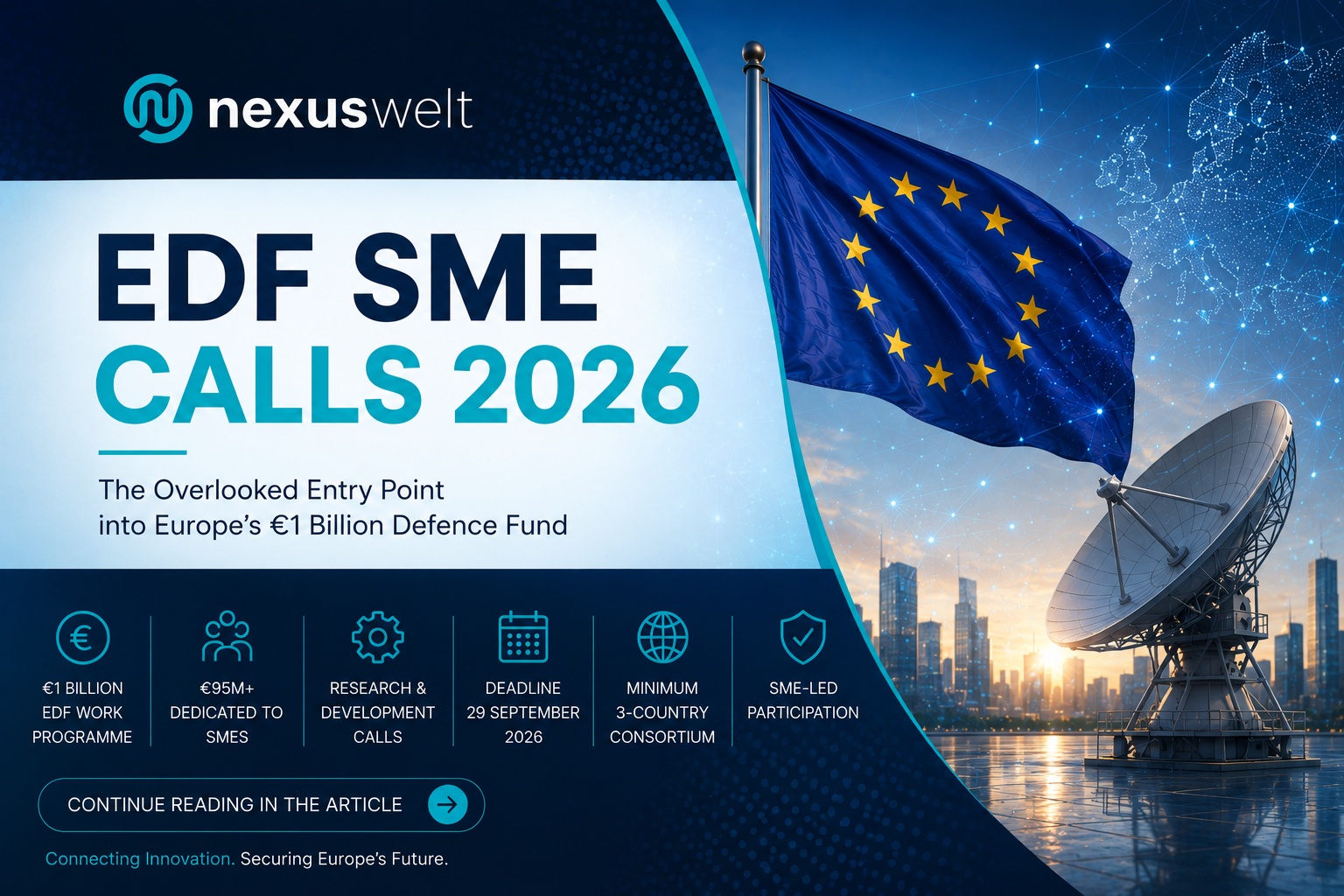
The European Defence Fund (EDF) 2026 Work Programme mobilises around €1 billion to support collaborative defence research and development in Europe. With 10 calls and 31 topics and a single submission deadline on 29 September 2026, EDF requires applicants to demonstrate capability relevance, European control, and implementation readiness under strict…
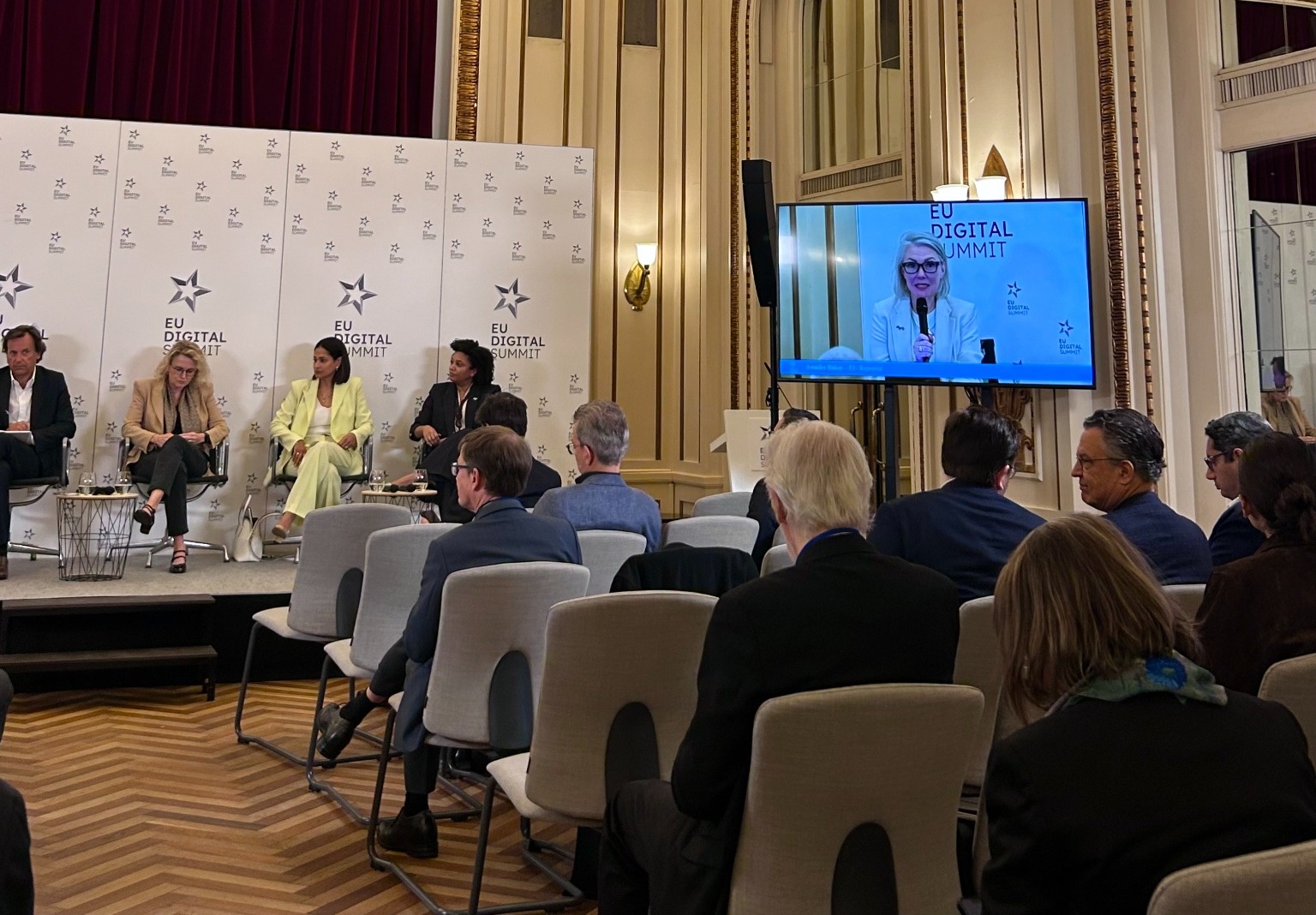
Munich Innovation Ecosystem Meetup 2026: AI leadership, ecosystem coordination and decision-making beyond hype At the Munich Innovation Ecosystem Meetup 2026, one message stood out clearly: AI is no longer only a trend discussion – it is already reshaping leadership, decision-making and innovation ecosystems in practice. For Nexuswelt, the strongest value…
Executive highlights • Economic security is now a formal EU policy frame shaping research priorities, collaboration choices and safeguards for sensitive technologies.• “Made in Europe” procurement and industrial acceleration concepts are moving from debate to concrete policy instruments, directly affecting exploitation and scale-up narratives.• Outbound investment review for advanced technologies…
Introduction Between late February and the end of March 2026, Nexuswelt is actively engaging across Munich, Dresden and Brussels through a series of innovation, policy, industry and Horizon Europe ecosystem events. These engagements span digital transformation, semiconductor collaboration, security and defence innovation, artificial intelligence, sustainability and bioeconomy partnerships. Through…
Europe does not lack research excellence. It lacks scalable market translation. Recent discussions around the EU Competitiveness Compass, the Automotive Action Plan, and the upcoming European Competitiveness Fund underline a structural challenge: European R&D investment is strong, yet global scale-up and commercial dominance remain limited. 1. Policy Context and Strategic…
A Comprehensive Guide to Communication, Dissemination and Exploitation in Horizon Europe Across All Clusters Context and relevance In Horizon Europe, communication, dissemination and exploitation (CDE) are no longer treated as supportive or horizontal activities. Across all clusters and action types, they are assessed as impact-enabling mechanisms that demonstrate whether project…
Context and relevance: why the KETs 2026 Brokerage Event matters now In early 2026, the Key Enabling Technologies (KETs) 2026 EU Brokerage Event in Karlsruhe brought together more than 200 stakeholders from across Europe to discuss upcoming Horizon Europe opportunities, with a particular focus on Cluster 4 topics and their…
1. Context and relevance Cybersecurity has moved from a technical concern to a core pillar of European industrial, digital and security policy. The European Union is responding to escalating cyber threats, systemic vulnerabilities in digital supply chains and growing geopolitical pressure by tightening regulatory requirements and significantly increasing public investment…
Horizon Europe Cluster 6 — Food, Bioeconomy, Natural Resources, Agriculture and Environment — represents one of the most policy-driven and strategically complex clusters within the Horizon Europe Framework Programme. The Cluster is central to delivering the European Green Deal, the Farm to Fork Strategy, the EU Biodiversity Strategy, climate adaptation…
Horizon Europe Cluster 6 – Food, Bioeconomy, Natural Resources, Agriculture and Environment – is a core pillar of the Horizon Europe Framework Programme and one of the most policy-driven clusters. It directly supports the implementation of the European Green Deal, the Farm to Fork Strategy, the EU Biodiversity Strategy, climate…