Why Top-Scoring Proposals Still Lose in Horizon Europe 2026: Why Cyprus and Ukraine Matter More Than Ever
Nexuswelt strategic blog draft with 2026 graph visuals
Horizon Europe is still one of the most important research and innovation programmes in the world, but in 2026 the competition is even more intense than many applicants realise. The overall programme budget for 2021–2027 is €95.5 billion, and the 2026–2027 main work programme alone mobilises €14 billion. At the same time, the programme has become shorter, broader, and more selective in how topics are framed. The Commission reduced the 2026–2027 work programme by 33% compared with the 2023–2024 edition, cut the number of topics by 35%, planned 50% of the call budget as lump-sum funding, and introduced 41 two-stage topics. This was presented as simplification and broader participation, but for applicants it also means tougher differentiation pressure inside fewer, larger calls.
This is exactly why the pain point around “15/15 and still not funded” has become so visible. Horizon Europe remains structurally oversubscribed. According to the Commission’s monitoring data for 2021–2024, 88,803 eligible proposals were submitted, 54% reached the quality threshold, but only 14,592 were retained for funding. The overall success rate was 16.4%, and only around 30% of above-threshold proposals could actually be financed. The Commission estimated that an additional €81.7 billion would have been needed to fund all proposals above threshold. This means that many strong proposals do not fail because they are weak. They fail because too many good proposals are competing for too little budget.
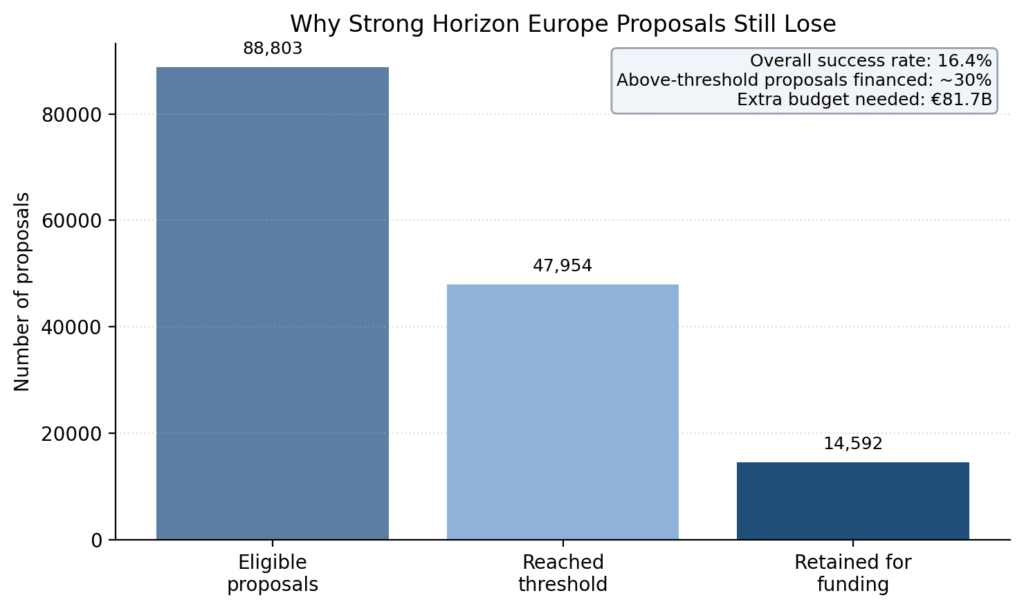
Figure 1. Why strong Horizon Europe proposals still lose.
Why this matters more in 2026
The 2026–2027 work programme is not only simplified. It is also more strategic. The Commission explicitly says it is less prescriptive, more open, and more newcomer-friendly, with more opportunities for SMEs, startups, civil society organisations, and smaller public administrations. That sounds positive, but it also changes the competitive logic. When topics are broader and descriptions are shorter, consortia have more freedom. At the same time, they have more responsibility to prove why their interpretation, pathway, and partnership are the right ones. In that environment, the gap between a good proposal and a funded proposal is often no longer just scientific quality. It is strategic positioning.
This is where Cyprus and Ukraine become especially relevant.
Cyprus is officially one of Horizon Europe’s Widening countries. Ukraine is an associated country to Horizon Europe, and official Horizon Europe information also lists Ukraine among associated countries with equivalent characteristics in terms of research and innovation performance in the WIDERA context. These are not identical categories, so they should not be merged carelessly. But together they form a highly relevant strategic axis for applicants who want stronger geographic reach, policy relevance, and broader European positioning.
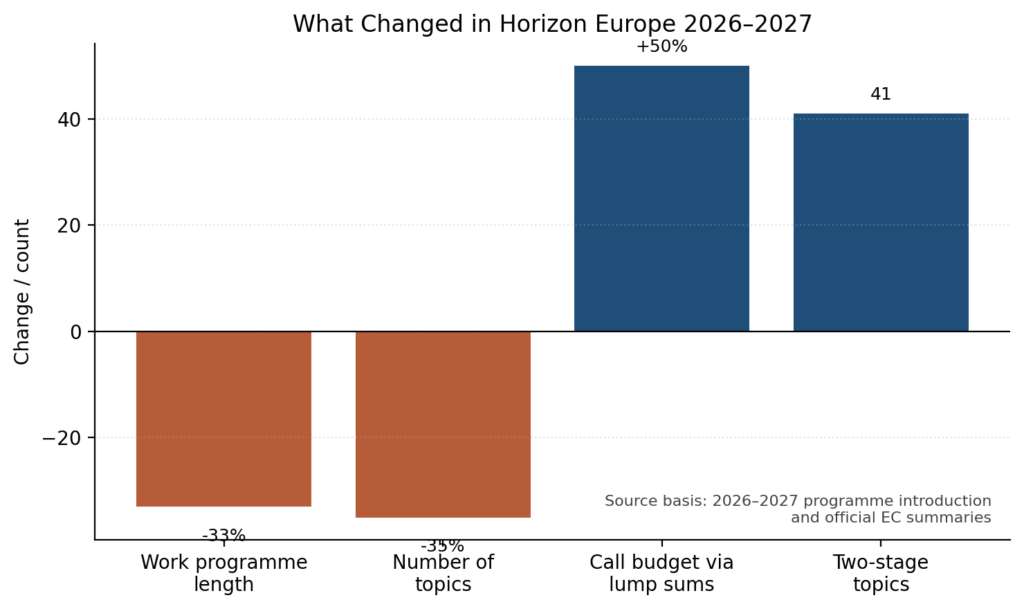
Figure 2. What changed in Horizon Europe 2026–2027.
Why Cyprus matters
Cyprus is formally inside the Widening architecture. That is a major strategic asset. WIDERA exists to reduce gaps between stronger and weaker research and innovation systems and to spread excellence more evenly across the European Research Area. Because Cyprus is officially part of that framework, it has policy relevance far beyond its size. In some WIDERA calls, coordination is explicitly limited to legal entities established in Widening countries. That makes Cyprus important not only in narrative terms, but in concrete programme design terms.
For consortium building, Cyprus offers a rare combination: it is a fully embedded EU Member State, but also a Widening country. That means it can strengthen a proposal’s geographic balance, widening relevance, institutional credibility, and alignment with the EU’s spreading-excellence objectives without creating the same legal or administrative complexity that can arise in other contexts. For organisations with a Cyprus presence, this is a strong positioning advantage.
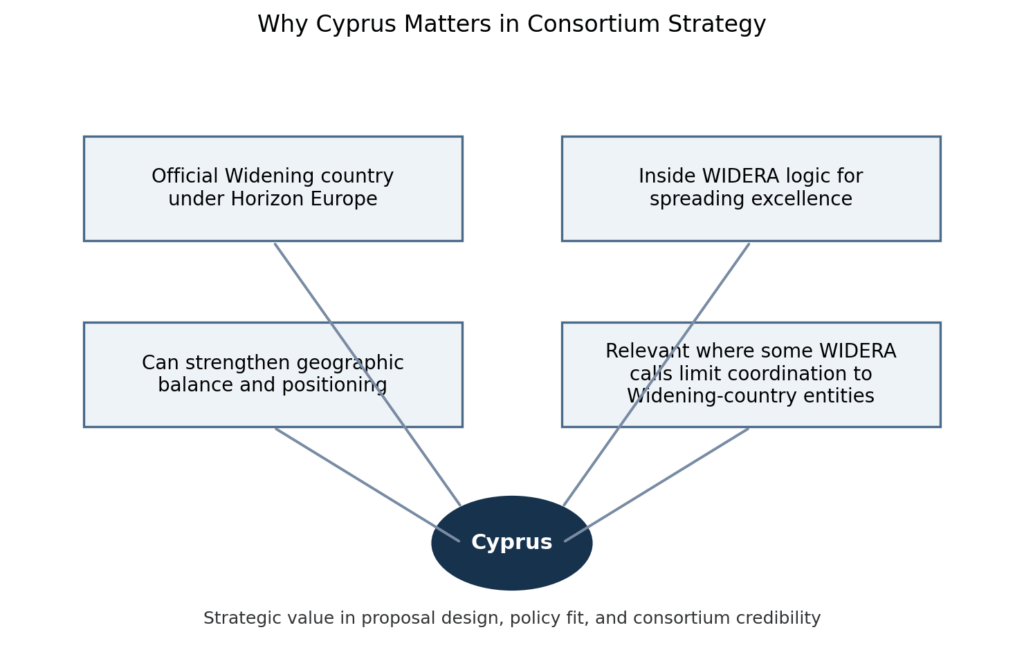
Figure 3. Why Cyprus matters in consortium strategy.
Why Ukraine matters
Ukraine’s role in Horizon Europe is now much deeper than many still assume. Ukraine participates in Horizon Europe as an associated country, and the Commission has explicitly encouraged opportunities for Ukrainian applicants since the start of the full-scale war. Official Horizon Europe materials list Ukraine among associated countries with equivalent R&I characteristics in the WIDERA context, which gives it particular relevance for widening-related positioning.
Ukraine’s funding performance also matters. By mid-2024, Ukrainian organisations had received €50 million in net Horizon Europe contributions across 172 projects. That already exceeded Ukraine’s Horizon 2020 total funding of €45.5 million. In 2023 alone, Ukraine doubled its Horizon Europe funding from €13 million to €20.3 million. These are not symbolic figures. They show that Ukraine is an increasingly serious participant in the programme.
But Ukraine’s value is not only financial. In July 2025, the International Coalition for Science, Research and Innovation in Ukraine was officially launched at the Ukraine Recovery Conference in Rome. The Coalition is designed to support both the urgent and long-term recovery of Ukraine’s R&I ecosystem and to integrate research more deeply into Ukraine’s broader recovery process. UNESCO has stated that more than 30% of Ukraine’s scientific infrastructure is completely gone, that 54% of scientists say they cannot operate as before, and that more than 20% of scientists have been affected by brain drain. UNESCO also cited an estimated need of $1.26 billion to restore public research infrastructure and $18 million for 2025–2026 core science ecosystem recovery activities. This makes Ukraine highly relevant for any proposal linked to resilience, recovery, international cooperation, infrastructure rebuilding, skills retention, or long-term European integration.
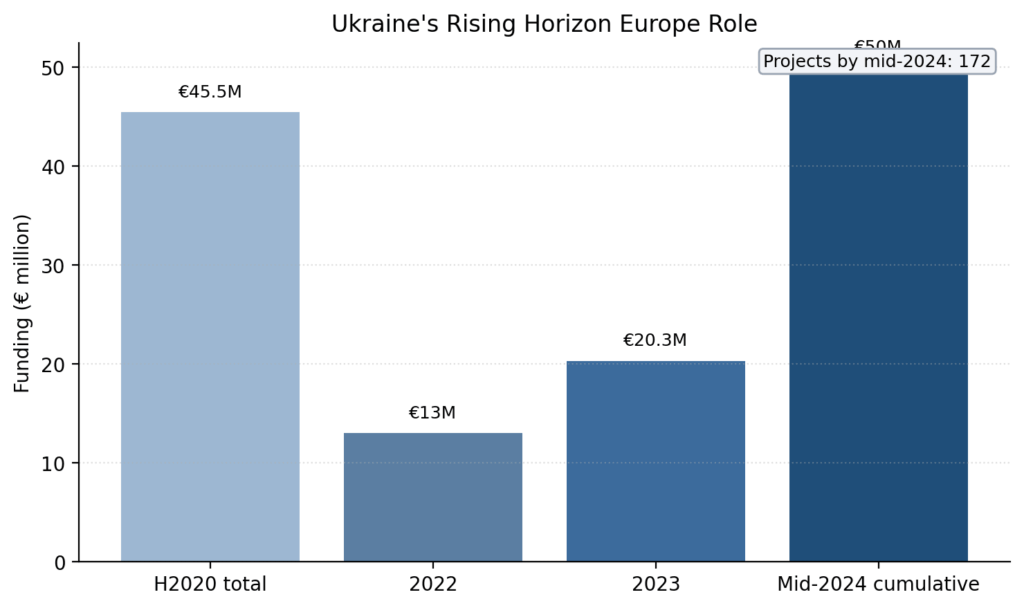
Figure 4. Ukraine’s rising Horizon Europe role.
Why even strong proposals still lose
The first reason is simple oversubscription. Too many high-quality proposals are competing for limited call budgets. This is the biggest structural explanation and the one that applicants often underestimate.
The second reason is insufficient differentiation. In the 2026–2027 framework, broader topics mean evaluators compare more varied approaches inside the same call. That increases the importance of a clear and distinctive strategic angle. A proposal may be excellent, but if it looks too similar to others, it can still lose out.
The third reason is weak impact architecture. Many proposals still treat impact, exploitation, dissemination, and stakeholder engagement as secondary sections. In practice, these sections are often decisive, especially in larger and broader calls where scientific quality alone does not separate applicants enough.
The fourth reason is consortium design. A closed-circle consortium built around the same traditional geographies may still look scientifically credible, but less strategically compelling. In 2026, the Commission is explicitly emphasising broader participation and newcomer-friendly approaches. That makes consortium composition more politically and strategically visible than before.
The fifth reason is policy misalignment. Horizon Europe is not just funding science in the abstract. It is shaping the future European R&I landscape. That includes widening, openness, recovery, resilience, and ecosystem-building. Proposals that reflect this bigger picture often look more convincing than those that remain narrowly technical.
Why Cyprus and Ukraine can strengthen a proposal
Cyprus and Ukraine should not be added as decorative partners. Tokenism is easy to spot. But when their role is real, they can strengthen a proposal in several dimensions at once.
- Cyprus can reinforce widening relevance, institutional positioning inside the EU framework, geographic balance, and eligibility and credibility in WIDERA-linked logic.
- Ukraine can reinforce resilience and reconstruction relevance, association with Europe’s long-term recovery agenda, stakeholder diversity, broader European and geopolitical significance, and access to a fast-growing associated-country participation base.
- Together, they can help a consortium look more aligned with the Europe Horizon Europe is trying to build in 2026, not just the Europe that dominated older framework programme networks.
Nexuswelt angle
For Nexuswelt, this is a strong strategic space. Cyprus gives you credibility inside the official Widening architecture. Nexuswelt Ukraine gives you relevance at the intersection of associated-country participation, resilience, and European integration. That means you can position Nexuswelt as more than a proposal consultancy. You can position it as a bridge between Cyprus, Ukraine, and the wider European innovation ecosystem, helping coordinators design consortia that are not only technically strong but also strategically better aligned with Horizon Europe 2026.
Conclusion
The most uncomfortable truth in Horizon Europe 2026 is that many proposals do not fail because they are poor. They fail because they are not strategically differentiated enough for the competition they face. In a programme where only a minority of above-threshold proposals can be funded, excellence remains essential, but it is no longer enough on its own. The proposals that win are often the ones that combine scientific strength with sharper impact logic, stronger consortium architecture, broader policy relevance, and more intelligent geographic positioning. That is why Cyprus and Ukraine matter so much right now. Cyprus matters because it is formally inside the Widening system. Ukraine matters because it is increasingly central to Europe’s resilience, research cooperation, and reconstruction agenda. For Horizon Europe applicants in 2026, that is not a side issue. It is a strategic signal.
#HorizonEurope2026 #HorizonEurope #EUFunding #EUProjects #ProposalStrategy #ConsortiumBuilding #WideningCountries #Cyprus #Ukraine #ResearchFunding #InnovationFunding #EUInnovation #ProposalWriting #StrategicPositioning #Nexuswelt