Die meisten Start-ups, die sich um europäische Fördermittel bewerben und dabei scheitern, scheitern nicht, weil ihre Idee schlecht war. Sie scheitern, weil sie noch nicht bereit für die Bewerbung waren, und niemand hat ihnen dies mitgeteilt, bevor sie acht Wochen damit verbrachten, dies herauszufinden.
Diese Checkliste dient dazu, dass Sie stattdessen auf dem Papier scheitern können. Gehen Sie sie ehrlich durch. Das Nichtbestehen einzelner Punkte ist kein Urteil über das Unternehmen – es handelt sich um eine Liste von Punkten, die behoben werden müssen, und die meisten davon lassen sich schneller beheben, als ein Einreichungszyklus dauert.
So verwenden Sie diese Funktion
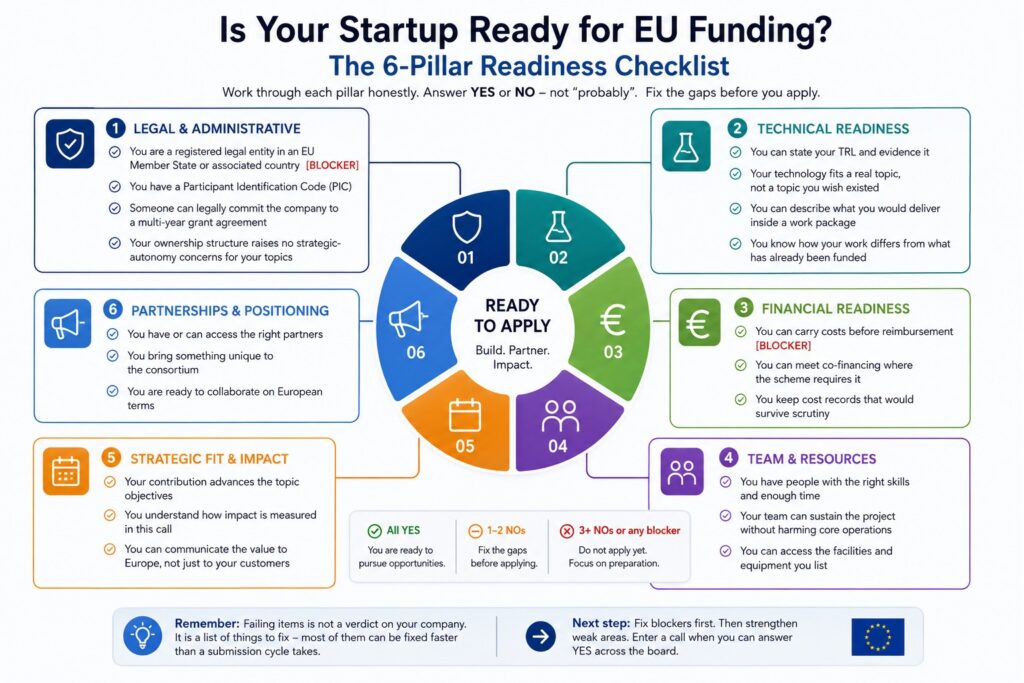
Sechs Abschnitte mit jeweils einer kleinen Anzahl von Fragen. Beantworten Sie jede Frage mit „Ja“ oder „Nein“ – nicht mit „wahrscheinlich“ oder „das könnte sein“. Am Ende finden Sie eine kurze Anleitung dazu, was Ihre Antworten bedeuten und wie Sie nun weiter vorgehen sollten.
Drei der Prüfkriterien sind Ausschlusskriterien: Wenn Sie diese nicht erfüllen, ist eine Bewerbung zum jetzigen Zeitpunkt – unabhängig von allen anderen Faktoren – reine Zeitverschwendung. Diese sind entsprechend gekennzeichnet.
1. Rechtliche und administrative Aspekte
| Überprüfen | Warum dies wichtig ist | Falls die Antwort „Nein“ lautet |
| Sie sind eine eingetragene juristische Person mit Sitz in einem EU-Mitgliedstaat oder einem assoziierten Land [BLOCKER] | Die Förderfähigkeit richtet sich nach der Rechtsform. Ein nicht registriertes Unternehmen oder ein Unternehmen, das außerhalb der förderfähigen Länder gegründet wurde, kann kein Förderempfänger sein. | Dies lässt sich innerhalb eines Einreichungszyklus nicht beheben. Bitte registrieren Sie sich zunächst oder suchen Sie sich einen Weg, bei dem dies nicht erforderlich ist. |
| Sie verfügen über einen Teilnehmer-Identifikationscode (PIC) | Es handelt sich um die Kennung, die im gesamten Portal für Fördermittel und Ausschreibungen verwendet wird. Die Beschaffung dieser Kennung in der Woche vor Ablauf der Frist ist eine häufige und vermeidbare Stressquelle. | Registrieren Sie sich jetzt auf dem Portal, unabhängig von einer bestimmten Ausschreibung. Es kostet nichts und macht Sie unabhängig. |
| Es muss eine Person geben, die das Unternehmen rechtlich an eine mehrjährige Fördervereinbarung binden kann | Ein Konsortium benötigt einen Unterzeichner und einen Entscheidungsträger, nicht nur einen Ansprechpartner. | Bestimmen Sie diese Person und übertragen Sie ihr die entsprechenden Befugnisse, bevor Sie sich an einen Koordinator wenden. |
| Ihre Eigentümerstruktur wirft hinsichtlich der von Ihnen angestrebten Themen keine Fragen hinsichtlich der strategischen Autonomie auf | Bei einigen Themen ist die Teilnahme eingeschränkt, wenn ein Unternehmen direkt oder indirekt von einem nicht teilnahmeberechtigten Land kontrolliert wird. | Prüfen Sie den Text zum jeweiligen Thema. Sollten Zweifel bestehen, klären Sie diese, bevor Sie in einen Vorschlag investieren. |
2. Technische Bereitschaft
| Überprüfen | Warum dies von Bedeutung ist | Falls die Antwort „Nein“ lautet |
| Sie können Ihren TRL angeben und diesen belegen | TRL legt fest, welche Instrumente Ihnen zur Verfügung stehen. Eine Überbewertung ist für die Gutachter erkennbar und untergräbt die Glaubwürdigkeit des gesamten Antrags. | Stellen Sie zunächst die Demonstrations- oder Validierungsdaten zusammen. Falls diese nicht vorliegen, ist Ihr TRL niedriger, als Sie annehmen. |
| Ihre Technologie passt zu einem realen Thema, nicht zu einem Thema, von dem Sie sich wünschen, dass es existieren würde | Vorschläge, die außerhalb des Themenbereichs liegen, werden unabhängig von ihrer Qualität abgelehnt. | Lesen Sie zwei vollständige Thementexte von Anfang bis Ende durch. Sollte nichts passen, wählen Sie ein anderes Instrument oder das nächste Arbeitsprogramm aus. |
| Sie können beschreiben, welche Leistungen Sie im Rahmen eines Arbeitspakets erbringen würden | Die Koordinatoren vergeben die Aufgaben. Die Kompetenzbeschreibungen geben ihnen keine Vorgaben, welche Aufgaben sie vergeben sollen. | Formulieren Sie Ihr Verkaufsargument in Form einer Rolle um: diese Aufgabe, diese Methoden, diese Einrichtungen, dieses Ergebnis. |
| Sie wissen, inwiefern sich Ihre Arbeit von bereits geförderten Projekten unterscheidet | Die Gutachter bewerten anhand des aktuellen Stands der Technik, und frühere EU-Projekte sind Teil davon. | Suchen Sie auf CORDIS nach geförderten Projekten in Ihrer Region. Auf diese Weise finden Sie auch Partner. |
3. Finanzielle Bereitschaft
| Überprüfen | Warum dies wichtig ist | Falls die Antwort „Nein“ lautet |
| Sie können Kosten vor der Erstattung vorläufig verbuchen [BLOCKER] | Europäische Fördermittel werden entsprechend dem Fortschritt ausgezahlt, nicht im Voraus über die Vorfinanzierung hinaus. Ein Unternehmen, das das Geld in diesem Quartal benötigt, kann dieses Instrument nicht nutzen. | Nutzen Sie andere Finanzmittel für den unmittelbaren Bedarf und betrachten Sie die EU-Fördermittel als strategischen Schritt für einen Zeitraum von zwölf Monaten. |
| Sie können die Kofinanzierung übernehmen, sofern dies im Rahmen des Programms vorgeschrieben ist | Einige Förderprogramme finanzieren nur einen Teil der förderfähigen Kosten, insbesondere bei gewinnorientierten Teilnehmern an Innovationsmaßnahmen. | Ermitteln Sie die Finanzierungsquelle bereits vor der Antragstellung und nicht erst nach der Auswahl. |
| Sie führen Kostenunterlagen, die einer Prüfung standhalten würden | Selbst bei einer Pauschalfinanzierung, bei der die Kommission die tatsächlichen Kosten nicht prüft, benötigen Sie dennoch Belege für Ihre eigene Buchführung und zur Erfüllung nationaler Verpflichtungen. | Bringen Sie die Buchhaltung in Ordnung. Es ist eine geringere Aufgabe, als es den Anschein hat, und sie behindert keine anderen Arbeiten. |
| Sie könnten ein zu niedrig veranschlagtes Budget auffangen | Bei einer Pauschalfinanzierung wird der Betrag bei Vertragsunterzeichnung festgesetzt und kann später nicht mehr korrigiert werden. | Planen Sie das Budget konservativ und lassen Sie den Kostenvoranschlag von jemandem überprüfen, der bereits Erfahrung damit hat. |
4. Team und Zeit
| Überprüfen | Warum dies von Bedeutung ist | Falls die Antwort „Nein“ lautet |
| Eine Führungskraft kann tatsächlich Zeit für den Vorschlag aufwenden [BLOCKER] | Die entscheidenden Aspekte – der technische Inhalt, die Wirkungslogik, die Rollendefinition – können von niemandem außerhalb des Unternehmens beigesteuert werden. | Warten Sie auf einen Zyklus, in dem dieser Zeitpunkt eintritt. Ein Vorschlag, der vollständig von einer externen Person verfasst wurde, liest sich auch wie ein solcher. |
| Sollten Sie gewinnen, wird jemand für die Berichterstattung und die Verwaltung zuständig sein. | Die Verpflichtungen bestehen während der gesamten Projektlaufzeit und darüber hinaus fort. Ein Partner, der keine Berichte vorlegen kann, stellt ein Problem für das gesamte Konsortium dar. | Weisen Sie den Betrag jetzt zu und berücksichtigen Sie ihn im Haushalt. |
| Ihr Team kann über Zeitzonen und Kulturen hinweg auf Englisch zusammenarbeiten | Die Arbeit im Konsortium bedeutet kontinuierliche Koordination und nicht nur eine Übergabe. | Seien Sie realistisch. Hier geht es um die Eignung, nicht um einen Sprachtest. |
| Sie können den Zeitrahmen auch ohne das Ergebnis überstehen | Von der Entscheidung bis zur ersten Zahlung vergehen realistisch gesehen etwa zwölf Monate. | Sollte der Plan des Unternehmens davon abhängen, dass dieses Geld eingeht, benötigt der Plan ein anderes Instrument. |
5. Strategische Bereitschaft
| Überprüfen | Warum dies wichtig ist | Falls die Antwort „Nein“ lautet |
| Sie können darlegen, warum Europa – abgesehen vom Geld – | Zugang zu Partnern, Validierung, Einfluss auf Standards, Markteintritt. Die alleinige Berücksichtigung von Fördermitteln rechtfertigt selten den Aufwand für einen geringen Anteil am Budget einer Zusammenarbeit. | Erarbeiten Sie zunächst die strategische Begründung. Dies trägt auch zur Verbesserung des Angebots bei, da dadurch Ihre Rolle verdeutlicht wird. |
| Sie wissen, welches Instrument geeignet ist und warum die anderen nicht geeignet sind | Die Wahl des Instruments bestimmt die Eignung, den Aufwand und das Ergebnis stärker als die Wahl des Themas. | Wählen Sie zwei aus, nicht zehn. Lesen Sie zu jedem Vorschlag den vollständigen Ausschreibungstext. |
| Sie können angeben, wer Ihre Ergebnisse nutzen würde und in welcher Weise | Dies ist die Frage nach der Verwertung, und genau hier verlieren Vorschläge am häufigsten Punkte. | Beantworten Sie diese Frage für jedes einzelne Ergebnis: Wer nutzt es, auf welchem Weg und welche Voraussetzungen müssen erfüllt sein, damit dies geschieht. |
| Sie sind bereit, eher als Partner denn als Koordinator zu agieren | Die Koordinierung ist eine mehrjährige administrative Verpflichtung und für fast jedes Start-up der falsche erste Schritt. | Formulieren Sie das Ziel neu. Erst die Beteiligung macht eine spätere Koordinierung erst möglich. |
6. Netzwerkbereitschaft
| Überprüfen | Warum dies wichtig ist | Falls die Antwort „Nein“ lautet |
| Sie verfügen über ein einseitiges Partnerprofil in englischer Sprache | Dies ist das Dokument, das bei der Gründung von Konsortien in Umlauf gebracht wird. Ohne dieses Dokument muss ein Koordinator Ihre Relevanz für Sie begründen – und das wird er nicht tun. | Bitte geben Sie dies in dieser Woche an: Gesuchte Position, erbrachte Leistung, Teilnahmeberechtigung, Ansprechpartner. |
| Sie haben mit Ihrer nationalen Kontaktstelle gesprochen | NCPs sind kostenlos, offiziell, werden zu selten genutzt, und eine Empfehlung durch einen NCP hat ein größeres Gewicht als eine spontane Kontaktaufnahme. | Nehmen Sie Kontakt mit ihnen auf, bevor Sie etwas benötigen. Dies ist die Zeit, in der Sie den größten Nutzen erzielen können. |
| Sie haben bestimmte Koordinatoren angegeben, keine Kategorie | Drei Wochen vor Ablauf einer Frist zwanzig Organisationen anzusprechen, bringt nichts. | Nutzen Sie CORDIS, um herauszufinden, wer ähnliche Arbeiten durchgeführt hat, und wenden Sie sich an zwei davon auf angemessene Weise. |
| Sie haben begonnen, bevor die Telefonkonferenz eröffnet wurde | Die meisten Konsortien bilden sich bereits vor der Veröffentlichung um eine Kerngruppe herum. Aus diesem Grund muss mit dem Aufbau eines Konsortiums bereits vor Beginn der Ausschreibungsfrist begonnen werden und nicht erst wenige Wochen vor Ablauf der Einreichungsfrist. | Richten Sie Ihren Fokus auf den nächsten Zyklus aus und nutzen Sie diesen, um das Netzwerk aufzubauen. Dies ist die richtige Entscheidung, kein Misserfolg. |
Was Ihre Antworten bedeuten
| Ergebnis | Was ist zu tun? |
| Ein Blocker ist fehlgeschlagen | Bitte in diesem Zyklus nicht umsetzen. Beheben Sie den Fehler. Kein anderer Punkt auf der Liste gleicht diesen aus. |
| Die meisten Prüfungen wurden bestanden, in den Abschnitten 1–3 gibt es einige Lücken | Es handelt sich hierbei um administrative Probleme, die innerhalb weniger Wochen behoben werden können. Beheben Sie diese und fahren Sie fort. |
| Die meisten Prüfungen wurden bestanden, Lücken in den Abschnitten 5–6 | Sie sind zwar technisch bereit, aber strategisch und gesellschaftlich noch nicht ausreichend vorbereitet. Dies ist das häufigste Profil, und es ist der Grund dafür, dass fähige Unternehmen schwache Angebote einreichen. Widmen Sie einen Zyklus der Positionierung und dem Aufbau von Netzwerken. |
| Lücken in den meisten Abschnitten | Betrachten Sie die Kaskadenfinanzierung – kleine Teilzuschüsse, die von geförderten Projekten im Rahmen eigener offener Ausschreibungen vergeben werden und mit weniger aufwendigen Antragsverfahren verbunden sind. Dies ist der schnellste legitime Weg, um die Erfolgsbilanz aufzubauen, die der Rest des Systems erwartet. Das Arbeitsprogramm 2026–27 nutzt die Kaskadenfinanzierung zudem in größerem Umfang als Einstiegsmöglichkeit für Neueinsteiger. |
Was eine Bewerbung ohne Vorbereitung tatsächlich kostet
Es ist verlockend, eine Einreichung als kostenlose Option zu betrachten. Das ist sie jedoch nicht.
- Sechs bis zwölf Wochen der Abschlusszeit, die anderweitig genutzt wurden.
- Glaubwürdigkeit gegenüber dem Koordinator, der Sie in das Projekt aufgenommen hat – dies ist von Bedeutung, da sich europäische Konsortien um Personen herum neu bilden, die bereits nachweislich Ergebnisse erzielt haben.
- Selbst ein schwacher Bewertungsbericht ist immer noch eine Dokumentation, und eine erneute Einreichung, die diesen ignoriert, wird schlechter bewertet als ein erster Versuch.
- Die Opportunitätskosten der Zeit, die Sie hätten nutzen können, um sich vorzubereiten.
Die Entscheidung, sich dieses Mal nicht zu bewerben, ist eine strategische Entscheidung, die sich wirklich auszahlt. Wenn man dies als Aufgeben darstellt, führt dies dazu, dass sich Unternehmen dennoch bewerben.
Ein 90-Tage-Bereitschaftsplan
- Wochen 1–2: Registrieren Sie sich auf dem Portal und beantragen Sie eine PIC-Nummer. Legen Sie Ihren TRL fest und belegen Sie diesen. Entscheiden Sie sich für Europa.
- Wochen 3–4: Lesen Sie zwei vollständige Ausschreibungstexte von Anfang bis Ende durch. Erstellen Sie eine Auswahlliste mit einem Instrument. Suchen Sie in CORDIS nach geförderten Projekten in Ihrem Fachgebiet und erstellen Sie eine Liste der wiederkehrenden Koordinatoren.
- Wochen 5–6: Verfassen Sie das einseitige Partnerprofil. Legen Sie Ihre Rolle im Rahmen eines Arbeitspakets fest. Wenden Sie sich an Ihre nationale Kontaktstelle.
- Wochen 7–9: Sprechen Sie gezielt zwei Koordinatoren an und gehen Sie dabei auf deren konkrete Arbeit ein. Melden Sie sich für die nächste relevante Maklerveranstaltung oder den nächsten Infotag an.
- Wochen 10–12: Bewerben Sie sich bei einer offenen Ausschreibung im Rahmen der Kaskadenfinanzierung, sofern eine passende vorliegt. Schließen Sie die finanziellen und administrativen Lücken aus den Abschnitten 1 und 3.
Am Ende ist Ihnen die Aufnahme in ein Konsortium jedoch nicht garantiert. Sie befinden sich in einer Situation, in der eine Einladung in ein Konsortium durchaus denkbar ist – wobei es sich dabei um ein anderes Unternehmen handelt als das ursprüngliche.
Wie Nexuswelt in dieser Phase mit Start-ups zusammenarbeitet
Das nützlichste Gespräch ist in der Regel das früheste – noch bevor ein Instrument ausgewählt wurde, solange ein Kurswechsel noch keine Kosten verursacht. Nexuswelt arbeitet mit Start-ups und KMU an der Eignungsprüfung, der Instrumentenauswahl, der Rollendefinition, der Erstellung von Partnerprofilen und der Positionierung im Konsortium und wirkt als Partner für Kommunikation, Verbreitung und Verwertung an geförderten Projekten mit. Eine umfassendere Einführung finden Sie in unserem Leitfaden zu EU-Fördermittel für Start-upssowie weitere Informationen zum Unternehmen finden Sie auf der „Über uns“-Seite von Nexuswelt.