Munich Innovation Ecosystem Meetup 2026: AI leadership, ecosystem coordination and decision-making beyond hype
At the Munich Innovation Ecosystem Meetup 2026, one message stood out clearly: AI is no longer only a trend discussion – it is already reshaping leadership, decision-making and innovation ecosystems in practice. For Nexuswelt, the strongest value of the event was the combination of three highly relevant themes: AI-augmented leadership and future skills, ecosystem coordination as a competitive advantage, and AI decision-making with a strong focus on systems, safety and the human factor.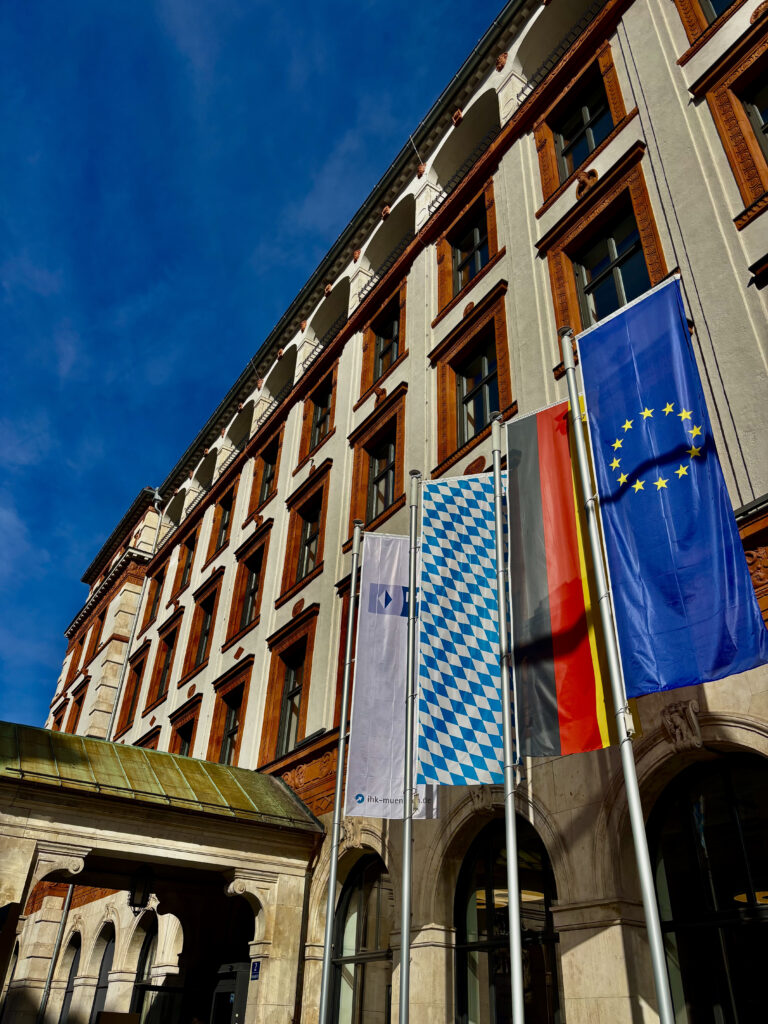
Why this meetup was especially relevant
This event was particularly valuable because it moved beyond generic AI hype and focused on implementation questions that organisations are facing right now:
- how to make better decisions with AI
- how to build future-ready teams and leadership capabilities
- how to coordinate ecosystems across startups, industry, academia and public actors
- how to create value responsibly, not only faster
For innovation ecosystems and European projects, this shift is critical: success increasingly depends on execution quality, governance and collaboration capacity – not only on access to tools.
Keynote takeaways: AI leadership, future skills and creative mindset
AI skills are becoming a baseline capability
A key takeaway from the keynote inputs was that AI skills are moving from “nice to have” to foundational professional capability. This changes how organisations should think about employability, team performance and leadership development.
What matters more now:
- ability to learn quickly
- ability to unlearn outdated habits
- ability to work in hybrid human + AI workflows
- ability to lead with both judgment and adaptability
For project teams and innovation actors, this means AI adoption is not only a tooling issue – it is a capability-building issue.
From concern to creation: why mindset matters in times of disruption
Another strong theme was the shift from reactive concern to intentional creation. In practice, this means focusing less on what cannot be controlled and more on what can be shaped:
- response
- energy
- boundaries
- questions
- next actions
This is highly relevant for leaders and teams navigating uncertainty. It supports stronger decision quality, better collaboration and more resilient innovation cultures.
What many people underestimate about Munich: ecosystem quality as a strategic advantage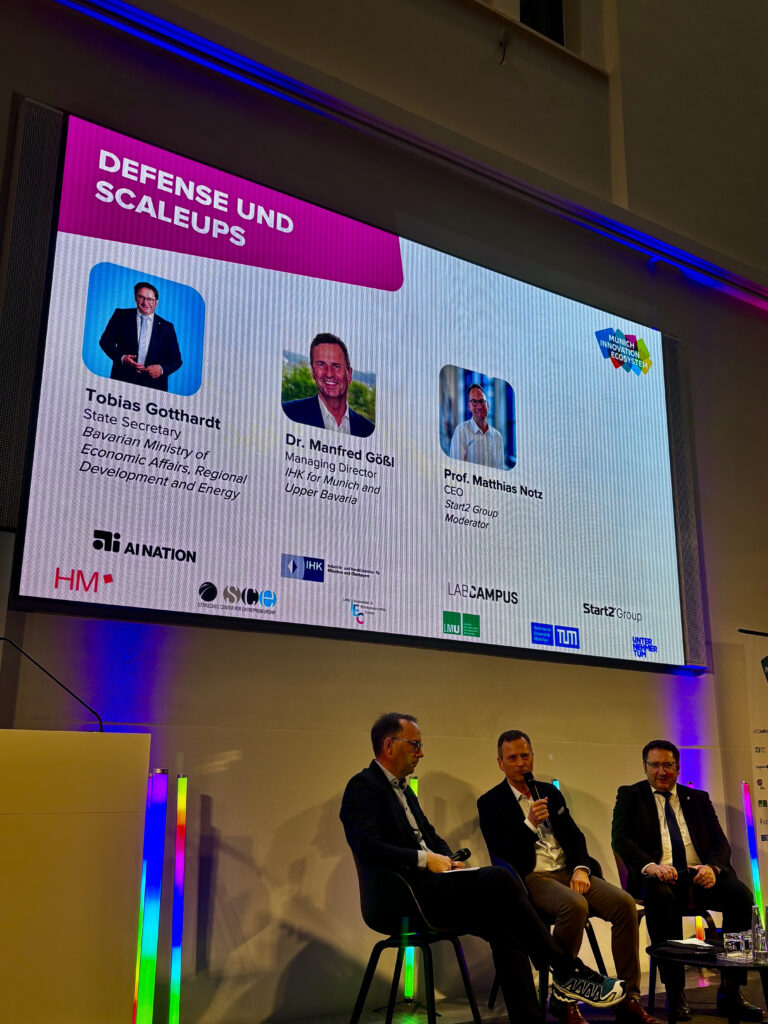
Munich is widely known for engineering, business and international visibility. What is often less visible – but strategically important – is the quality of its ecosystem coordination.
Munich’s advantage is not only that it has startups, corporates, universities and institutions in the same region. The real strength is the coordination layer:
- convening the right actors
- building trust across sectors
- aligning around real priorities
- translating discussions into implementation
Many ecosystems have events. Fewer ecosystems create implementation capacity through coordination.
This is one reason why Munich is increasingly relevant for Europe’s next phase of innovation collaboration.
AI decision-making panel: the most actionable insights for organisations
1. The bottleneck is often mindset, not technology
Many organisations already have access to AI tools and pilots. What slows real adoption is often leadership mindset and decision culture:
- low trust in data-supported decisions
- resistance to workflow redesign
- unclear ownership
- hesitation to change established routines
AI transformation is not only a technical rollout. It is an organisational and management challenge.
2. Model ≠ system ≠ agent (and this matters for implementation)
One of the most useful clarifications from the panel was distinguishing between:
- AI model
- AI system
- AI agent
This matters because organisations often say “AI” while discussing very different layers of implementation. Successful deployment depends on system design, workflow integration, permissions and governance – not only model capability.
3. The HIPPO problem still affects decision quality
A highly relevant insight was the persistence of the “HIPPO” problem (Highest Paid Person’s Opinion). Even when data and AI-supported insights exist, decisions may still be dominated by hierarchy instead of evidence.
This means AI maturity is not only technical maturity. It is decision-culture maturity.
4. Efficiency is only half the story – reallocation is the strategic question
AI and agentic systems can improve efficiency and reduce repetitive work. But the bigger question is what organisations do with the time and capacity they free up.
Cost reduction alone is often the least strategic use of AI. Long-term value comes from reinvesting capacity into innovation, better services, quality improvements, strategic work, and capability building.
5. AI sovereignty should be understood as “ability to act”
A strong panel takeaway for Europe was that AI/digital sovereignty is not only about hosting. It is also about:
- understanding dependencies
- retaining alternatives
- building capabilities and talent
- preserving flexibility
- maintaining the ability to make and adapt decisions over time
This is a more practical and strategic framing of sovereignty for organisations and ecosystems.
What this means for Nexuswelt and European project ecosystems
For Nexuswelt, the strongest takeaway from the Munich meetup is that three dimensions are converging across innovation ecosystems:
- AI capability and future skills
- ecosystem coordination and cross-actor collaboration
- governance-aware AI implementation and decision-making
This has direct relevance for:
- proposal and project design
- consortium collaboration
- work package planning
- capability building and training
- dissemination and communication of AI-related outcomes
- impact and implementation pathways
In short: the challenge is no longer only ambition. It is translation – from strategy to execution, and from AI potential to responsible implementation.
Conclusion: why Munich is worth watching
The Munich Innovation Ecosystem Meetup 2026 showed that the most valuable AI discussions today are not only about trends. They are about implementation quality: leadership, systems thinking, governance and ecosystem coordination.
Munich’s relevance lies not only in startup energy or industrial strength, but in its ecosystem architecture – the ability to connect actors and move from conversation to coordinated action.
For Nexuswelt, this is exactly the direction that matters for Europe’s innovation future: building the conditions to apply AI responsibly, effectively and collaboratively.
#MunichInnovationEcosystem #InnovationAgenda2030 #AILeadership #DecisionMaking #AIGovernance #FutureSkills #InnovationEcosystem #StrategicInnovation #EUProjects #HorizonEurope #Nexuswelt
#AITransformation #EuropeanInnovation #DigitalSovereignty #MunichStartup