An unsuccessful Horizon Europe result comes with an Evaluation Summary Report (ESR). It is the most detailed external assessment your proposal will receive, and the final score is the least useful part of it. Whether to resubmit should depend on the nature of the weaknesses, the conditions of the next call, the readiness of the consortium and the fit with a future topic.
This article covers the standard single-stage evaluation of Research and Innovation Actions and Innovation Actions under the Horizon Europe main work programme 2026–2027. ERC, EIC, MSCA and the institutionalised partnerships, including Joint Undertakings, follow their own rules, and individual topics can deviate from the general conditions.
What an Evaluation Summary Report can and cannot tell you
Each criterion (Excellence, Impact, and Quality and efficiency of the implementation) is scored from 0 to 5, and half-marks may be given. The scores and comments are the result of individual evaluations, a consensus discussion and a panel review that checks consistency across all proposals before ranking them.
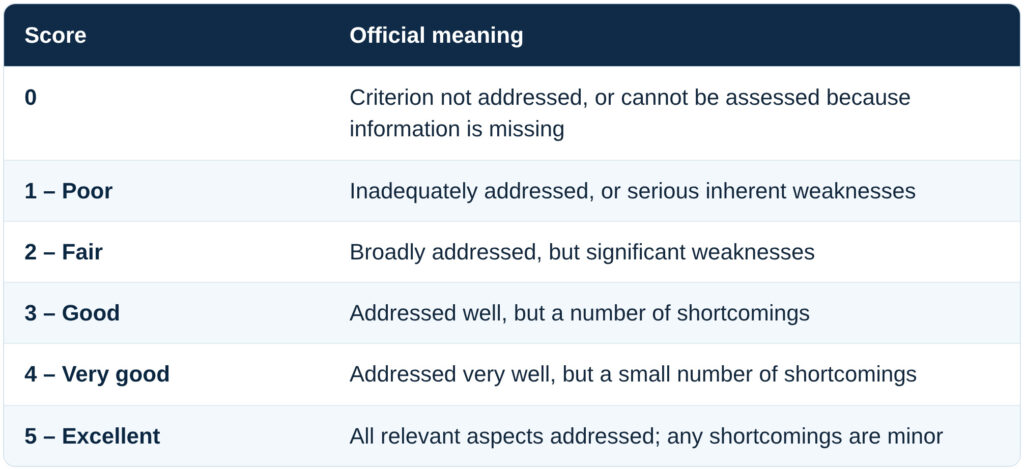
The ESR shows which aspects the experts considered shortcomings, how the problems are spread across the criteria and whether any part of the proposal was judged out of scope. For lump sum topics, it includes budget comments for proposals invited to grant preparation, placed on the reserve list, or rejected because costs were significantly misestimated.
It does not tell you how to fix the proposal. Experts evaluate proposals as submitted and are instructed not to recommend modifications such as a different consortium or budget, so a comment that the proposal “would benefit from” something describes a gap, not a specification. It does not give a point value per comment either: scores are awarded per criterion, and diplomatic wording carries no fixed penalty. Nor does it say anything about competing proposals or how a future panel will judge a revised version.
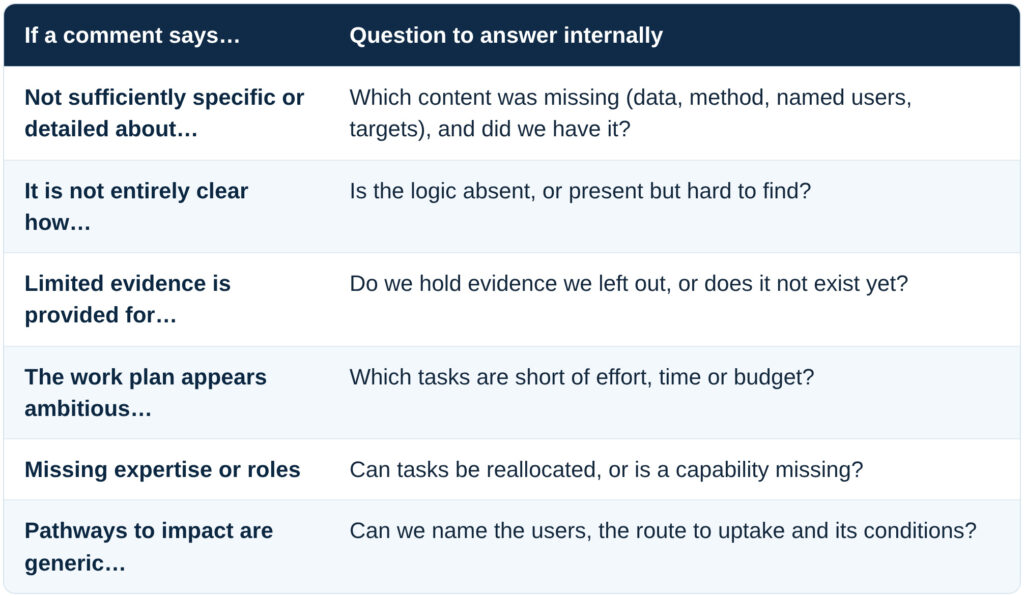
Read each comment as a question the consortium has to answer:
Evaluation thresholds versus funding ranking
Under the standard rules, each criterion has a threshold of 3 and the total must reach 10 out of 15. Passing both does not mean funding. Above-threshold proposals are ranked by score and funded within the available call budget. For Innovation Actions, Impact is weighted by 1.5 for ranking only. Equal scores are separated by a set priority order: coverage of aspects of the call not already covered, then the Excellence and Impact scores (Impact first for Innovation Actions), then gender balance among leading researchers, then geographical diversity.
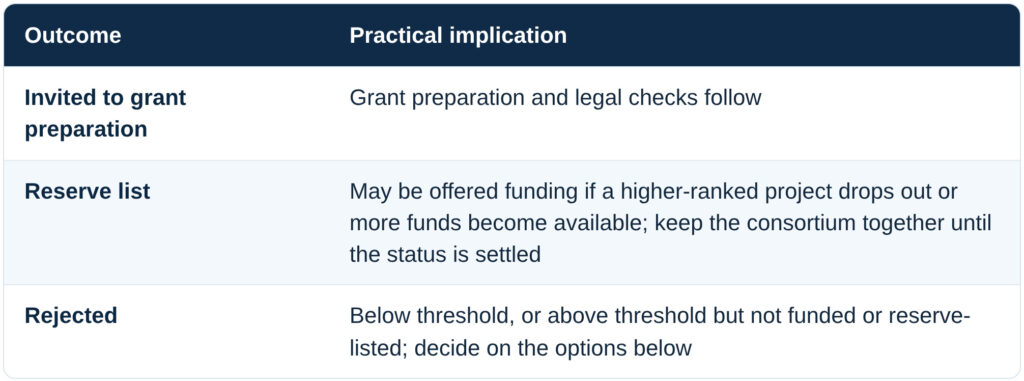
Where a topic provides for it, proposals that deserved funding but missed out on budget can also receive a Seal of Excellence. Do not over-read the distance to the funding line: it depends on the budget and on the other proposals in that round, and final call budgets can change after evaluation.
The evaluation review procedure covers procedure only, not the experts’ judgement of merit. It must be requested within 30 days of accessing the results, and a notification left unopened for 10 days counts as accessed.
Two-stage calls are different. At stage 1 only Excellence and Impact are assessed, each with a threshold of 4. The overall threshold is set afterwards so that the budget requested at stage 2 is close to three times the available budget, normally at 8 or 8.5, and some topics evaluate stage 1 blindly. Our guide to two-stage calls explains the procedure.
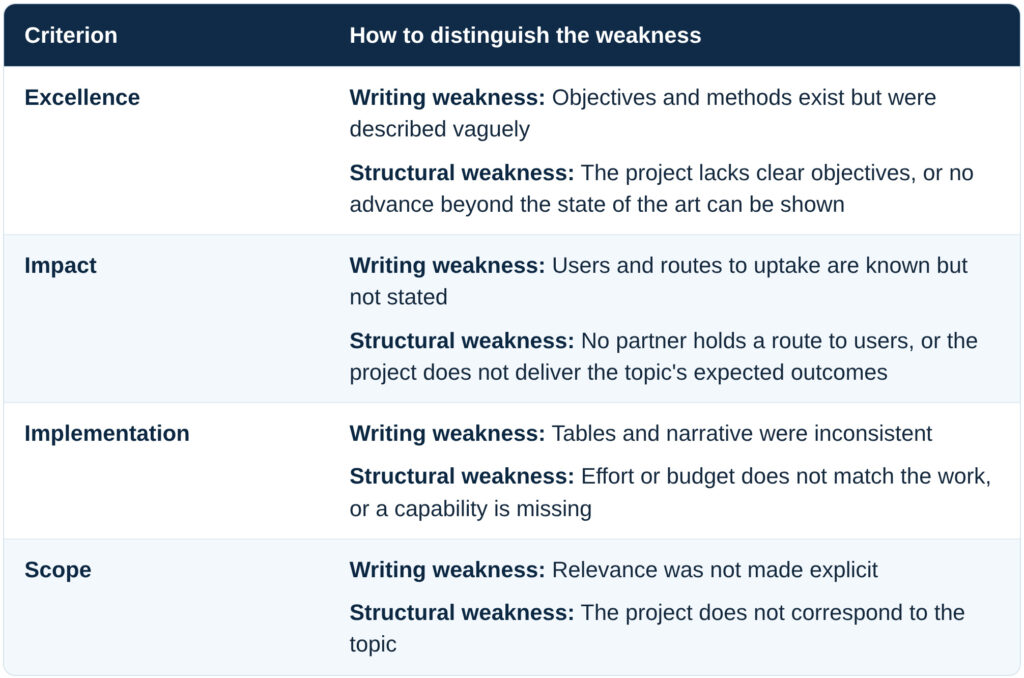
Writing weaknesses versus structural weaknesses
A writing weakness means the content existed but was not on the page, was hard to find or was not linked to the criterion. A structural weakness means the project lacks something: a capability, a user, evidence, a credible method, adequate resources or a fit with the topic. Better writing does not fix a structural weakness, because experts assess what the proposal contains.
Two questions separate them. Could we fix this with information we already have? Would fixing it change the objectives, partners, work plan or budget? If the second answer is yes, treat the weakness as structural, however mild the wording.
Revise, rebuild, change the topic or stop
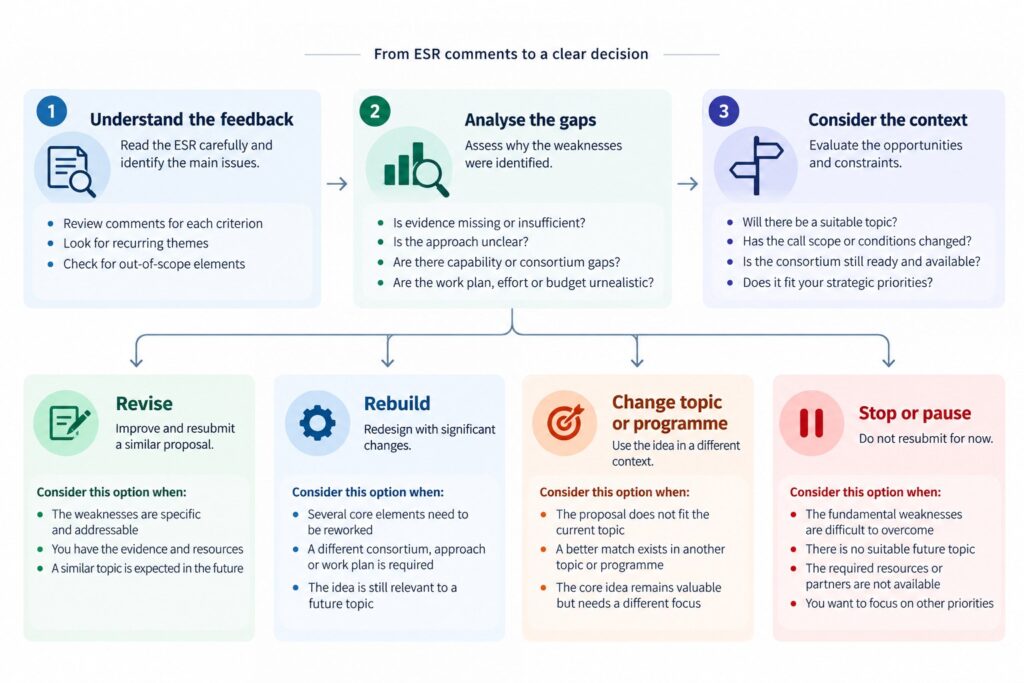
Three conditions apply to every option. A revised proposal is evaluated against the call it is submitted to, and topic texts, templates and lump sum rules change between work programmes, so corrective actions must answer the new topic, not only the old ESR. If several applications are submitted for the same or a very similar project, only one is accepted. And do not assume the next panel has or has not seen the earlier proposal: write it to stand on its own, without referring to or arguing with the previous evaluation.
When a different topic looks attractive, check its competition first; our analysis of Horizon Europe success rates shows how to approach that. If rebuilding means adding a partner, define the missing role before searching, as described in our article on consortium strategy.
Stopping is a legitimate outcome. The consortium still keeps its working relationships, a documented project logic and a detailed external assessment of the project’s weak points.
Turning evaluator comments into owned actions
Once the direction is set, turn the ESR into a weakness register with one row per comment.
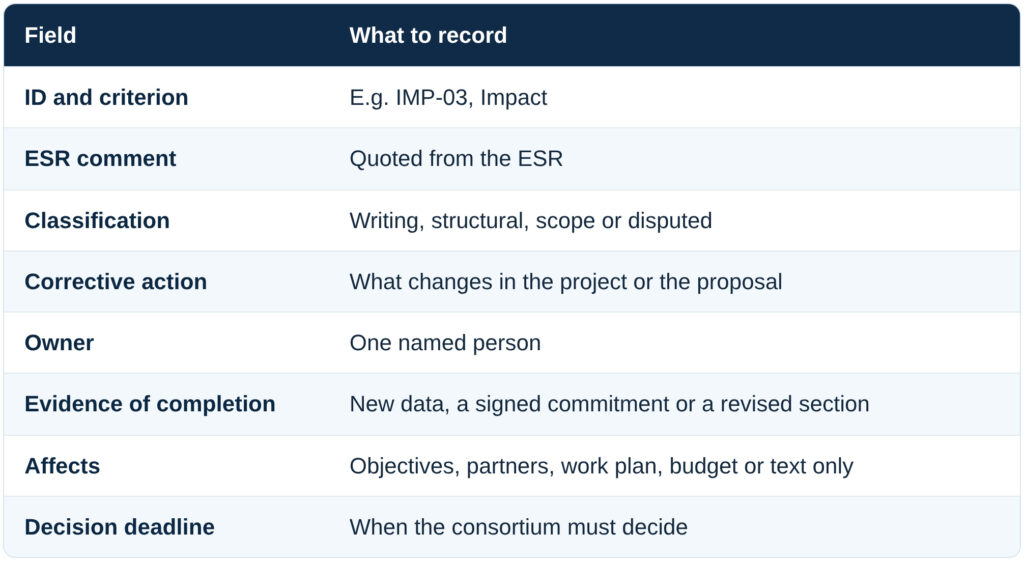
Give each action one owner. Keep disputed comments on a separate list and test them with someone outside the writing team; if the consortium still disagrees, make the point clearer rather than rebutting the experts. Prioritise by threshold risk, the size of any structural gap, relevance to the new topic and lead time. Improving the lowest-scoring criterion does not necessarily produce the largest gain.
An illustrative 30-day decision framework
This timetable reflects practical judgement, not an official procedure.
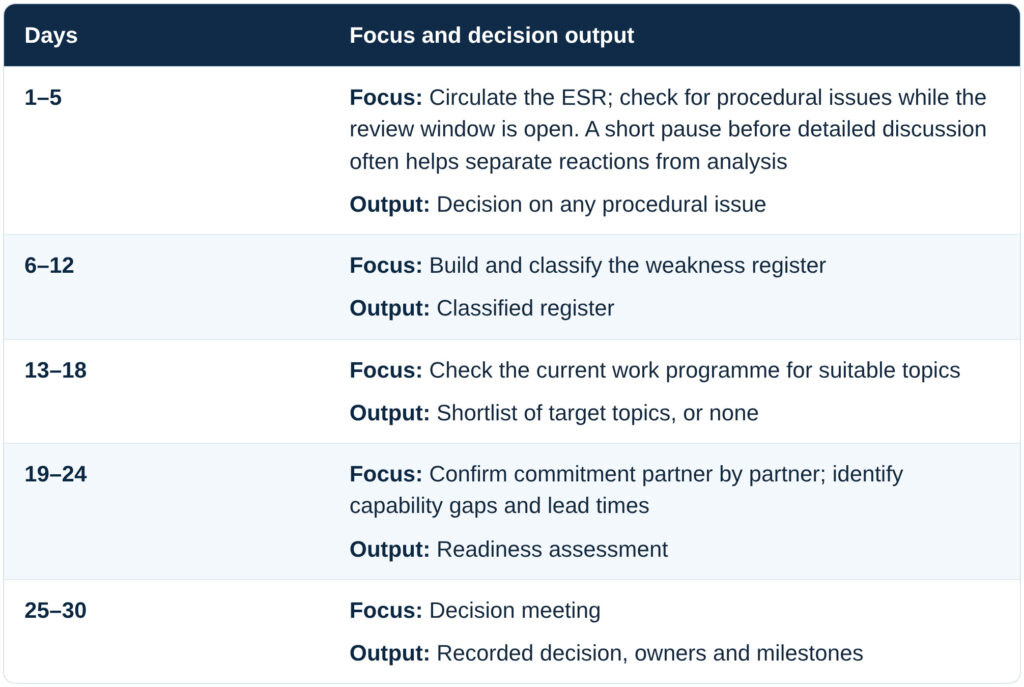
If the proposal is on a reserve list, run the analysis but hold the decision until its status is clear.
When an independent review helps
The authors of a proposal read the ESR through their own intentions; an independent reviewer reads only what is on the page. That is most useful when partners disagree about whether weaknesses are structural, when a change of topic is on the table, when the ESR mixes strong comments with threshold-level scores, or when a new coordinator takes over.
A scoped review should map each ESR comment to the proposal, classify each weakness, assess fit against the target topic and list the decisions the consortium must take. It cannot predict a score or guarantee funding. Choose a reviewer who is not evaluating the same topic: the Funding & Tenders Portal advises applicants not to discuss proposals with people who may act as expert evaluators.
For proposal development and support, including discussion of review needs, see Nexuswelt’s proposal support service. Any review scope and fees must be agreed before work starts.