Horizon Europe Cluster 6 – Food, Bioeconomy, Natural Resources, Agriculture and Environment – is a core pillar of the Horizon Europe Framework Programme and one of the most policy-driven clusters. It directly supports the implementation of the European Green Deal, the Farm to Fork Strategy, the EU Biodiversity Strategy, climate action, circular economy objectives and the long-term resilience of food and natural resource systems in Europe.
Based on the official European Commission Cluster 6 Info Days, this article consolidates the key strategic, evaluative and implementation-related guidance provided to applicants. It is designed as a general reference for coordinators, consortium partners, research organisations, SMEs, public authorities and innovation actors preparing proposals under Cluster 6 calls.
1. The Strategic Role of Cluster 6 in Horizon Europe
Cluster 6 addresses societal challenges linked to food systems, agriculture, forestry, fisheries, bio-based industries, biodiversity protection, climate adaptation and environmental sustainability. Unlike technology-driven clusters, Cluster 6 proposals are expected to demonstrate strong policy relevance, stakeholder engagement and real-world applicability.
Projects funded under Cluster 6 are instruments for policy implementation. Proposals must therefore clearly explain how research and innovation activities contribute to EU strategies, regulatory frameworks and societal transitions.
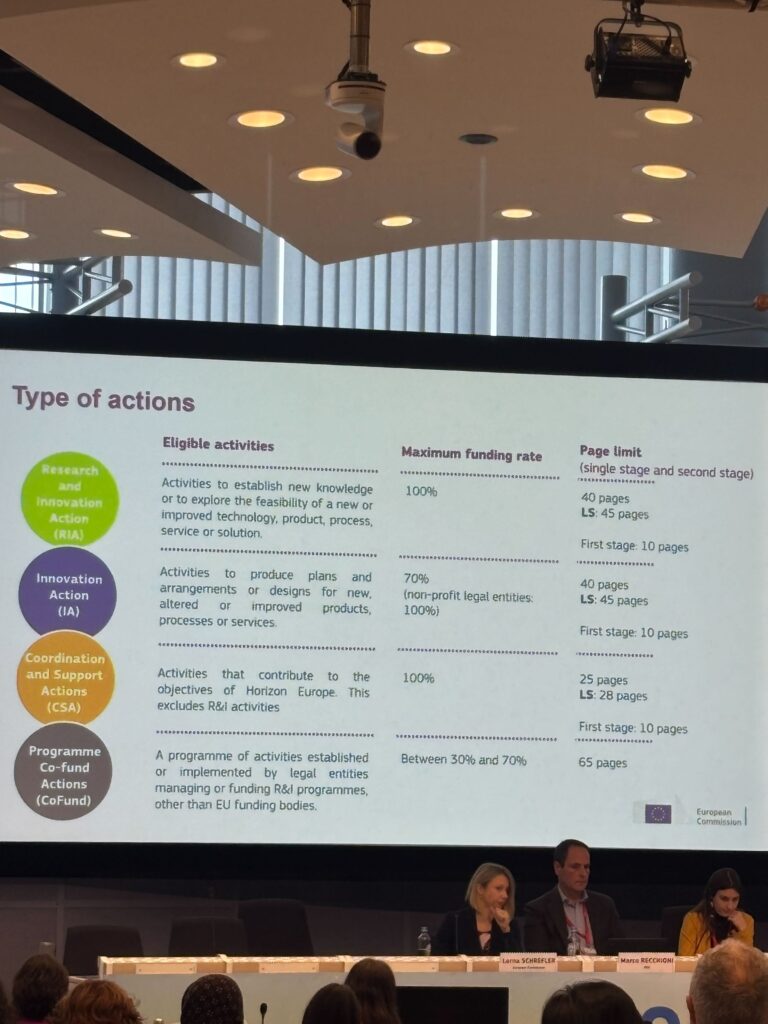
2. Understanding the Evaluation Logic in Cluster 6
Proposals submitted under Cluster 6 are evaluated according to three main criteria: Excellence, Impact and Quality and Efficiency of Implementation. These criteria are not assessed in isolation. Evaluators expect a coherent narrative linking objectives, methods, outcomes, impacts and resources.
A recurring message from the Info Days is that strong proposals are outcome-oriented. Applicants must demonstrate not only scientific or technical quality, but also how results will translate into concrete benefits for policy, practice, markets or society.
3. Excellence: Beyond the State of the Art
Under the Excellence criterion, evaluators assess the clarity and relevance of objectives, the credibility of the methodology and the extent to which the proposal goes beyond the current state of the art.
In Cluster 6, excellence is not limited to scientific novelty. It also includes interdisciplinary approaches, integration of social sciences and humanities where relevant, and the appropriate consideration of environmental, social and economic dimensions.
Overly generic objectives or insufficient differentiation from existing projects are common weaknesses identified by evaluators.
4. Impact: From Results to Policy and Practice
Impact is a defining element of Cluster 6 proposals. Applicants must clearly describe pathways to the expected outcomes and impacts specified in the Work Programme.
This includes:
– Identification of target groups and end users
– Quantification of expected impacts where possible
– Alignment with EU policies and strategies
– A clear distinction between communication, dissemination and exploitation activities
Evaluators frequently note that impact sections fail when they remain abstract or descriptive. Concrete measures, indicators and responsibilities are required.
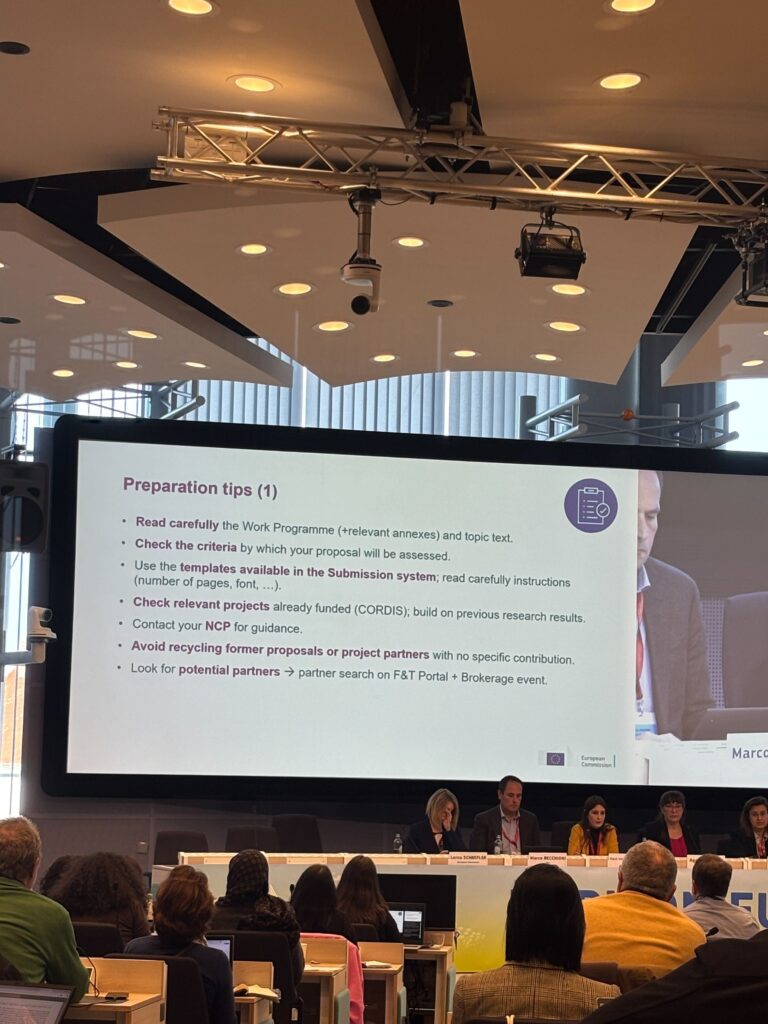
5. Communication, Dissemination and Exploitation
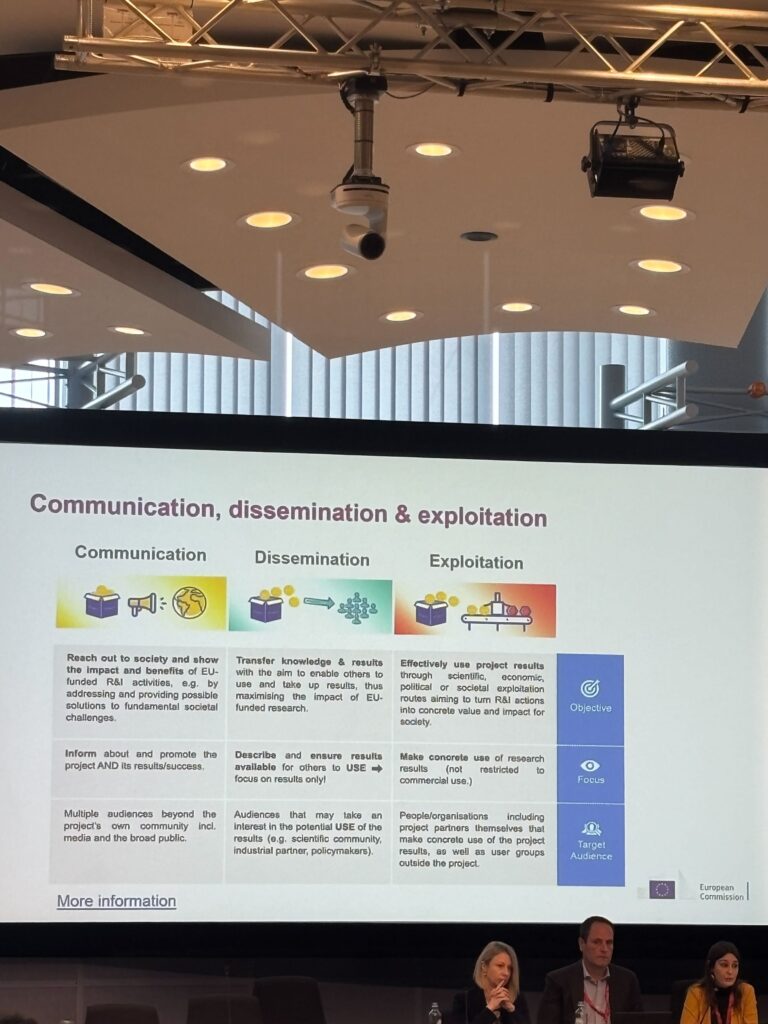
The Info Days strongly emphasised the need to clearly differentiate between:
– Communication: raising awareness about the project and its relevance
– Dissemination: sharing results with relevant stakeholders and communities
– Exploitation: using results for policy uptake, standardisation, market deployment or further innovation
These activities must be planned from the start, properly resourced and tailored to specific audiences. Treating them as a single, generic work package is a common reason for low scores.
6. Consortium Design and the Multi-Actor Approach
Many Cluster 6 topics require a multi-actor approach. This means the active involvement of practitioners, policymakers, industry actors, civil society or end users throughout the project lifecycle.
Successful consortia:
– Cover all required competences
– Involve stakeholders early and continuously
– Clearly define roles and responsibilities
– Demonstrate operational capacity and commitment
All partners should be involved in proposal preparation and fully understand the project objectives and work plan.
7. Implementation: Work Plans, Work Packages and Resources
Under the Implementation criterion, evaluators assess the quality and coherence of the work plan, including work packages, tasks, deliverables, milestones and resource allocation.
Key expectations include:
– Logical structure of work packages aligned with objectives
– Clear task descriptions and responsibilities
– Realistic timelines and risk management measures
– Consistency between tasks and allocated resources
Poor internal coherence or underestimation of horizontal tasks such as project management, data management, ethics, communication and dissemination is frequently penalised.
8. Use of Generative AI Tools in Proposal Preparation
The European Commission confirmed that generative AI tools may be used to support proposal preparation. However, applicants remain fully responsible for the content of their proposals.
AI-generated content must be carefully reviewed to avoid inaccuracies, inconsistencies, plagiarism or intellectual property issues. Transparency and compliance with ethical standards remain essential.
9. Common Weaknesses Observed by Evaluators
Based on feedback shared during the Info Days, recurring weaknesses include:
– Insufficient alignment with the call text and expected outcomes
– Weak or unconvincing impact pathways
– Lack of differentiation from existing projects
– Poorly structured work packages
– Inadequate treatment of dissemination, exploitation and communication
– Insufficient consideration of ethics and data management
Addressing these issues early significantly improves proposal quality.
10. Strategic Implications for Cluster 6 Applicants
Cluster 6 proposals require a balanced combination of scientific quality, policy relevance, stakeholder engagement and implementation credibility. Template-based or recycled proposals rarely succeed.
Successful applicants invest in early preparation, consortium alignment and evaluator-oriented proposal design.
How Nexuswelt Supports Cluster 6 Proposals
Nexuswelt supports organisations across the full Horizon Europe Cluster 6 proposal lifecycle, including:
– Call and topic analysis
– Proposal structuring aligned with evaluation logic
– Consortium building and partner positioning
– Impact pathways, dissemination, communication and exploitation strategies
– Work plan and implementation coherence checks
– Proposal reviews from an evaluator perspective
#HorizonEurope
#Cluster6
#EUFunding
#EUResearch
#EUInnovation
#GreenDeal
#Bioeconomy
#FoodSystems
#AgricultureInnovation
#EnvironmentalResearch
#EUProjects
#ResearchAndInnovation
Horizon Europe
https://research-and-innovation.ec.europa.eu/funding/funding-opportunities/funding-programmes-and-open-calls/horizon-europe_en
Horizon Europe Cluster 6
https://research-and-innovation.ec.europa.eu/funding/funding-opportunities/funding-programmes-and-open-calls/horizon-europe/cluster-6-food-bioeconomy-natural-resources-agriculture-and-environment_en
EU Research Funding
https://research-and-innovation.ec.europa.eu/funding_en
Bioeconomy
https://research-and-innovation.ec.europa.eu/research-area/environment/bioeconomy_en
Agriculture and Food Systems Innovation
https://research-and-innovation.ec.europa.eu/research-area/agriculture-and-rural-development_en