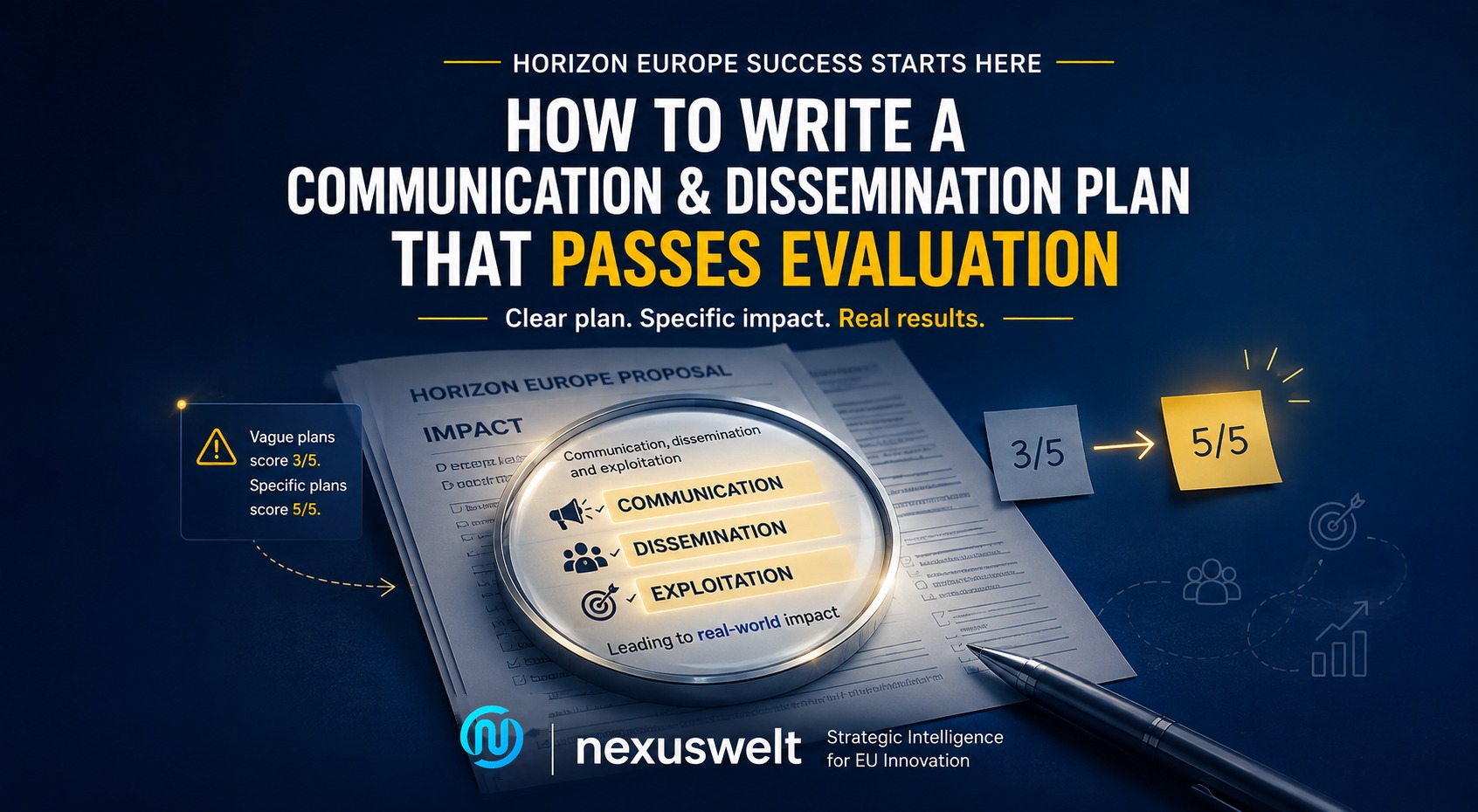
Impact is where technically excellent proposals lose. A consortium that scores well on Excellence and Implementation and only three out of five on Impact will usually not be funded, because in a field this competitive the threshold is not the problem – the ranking is. The difference between a three…
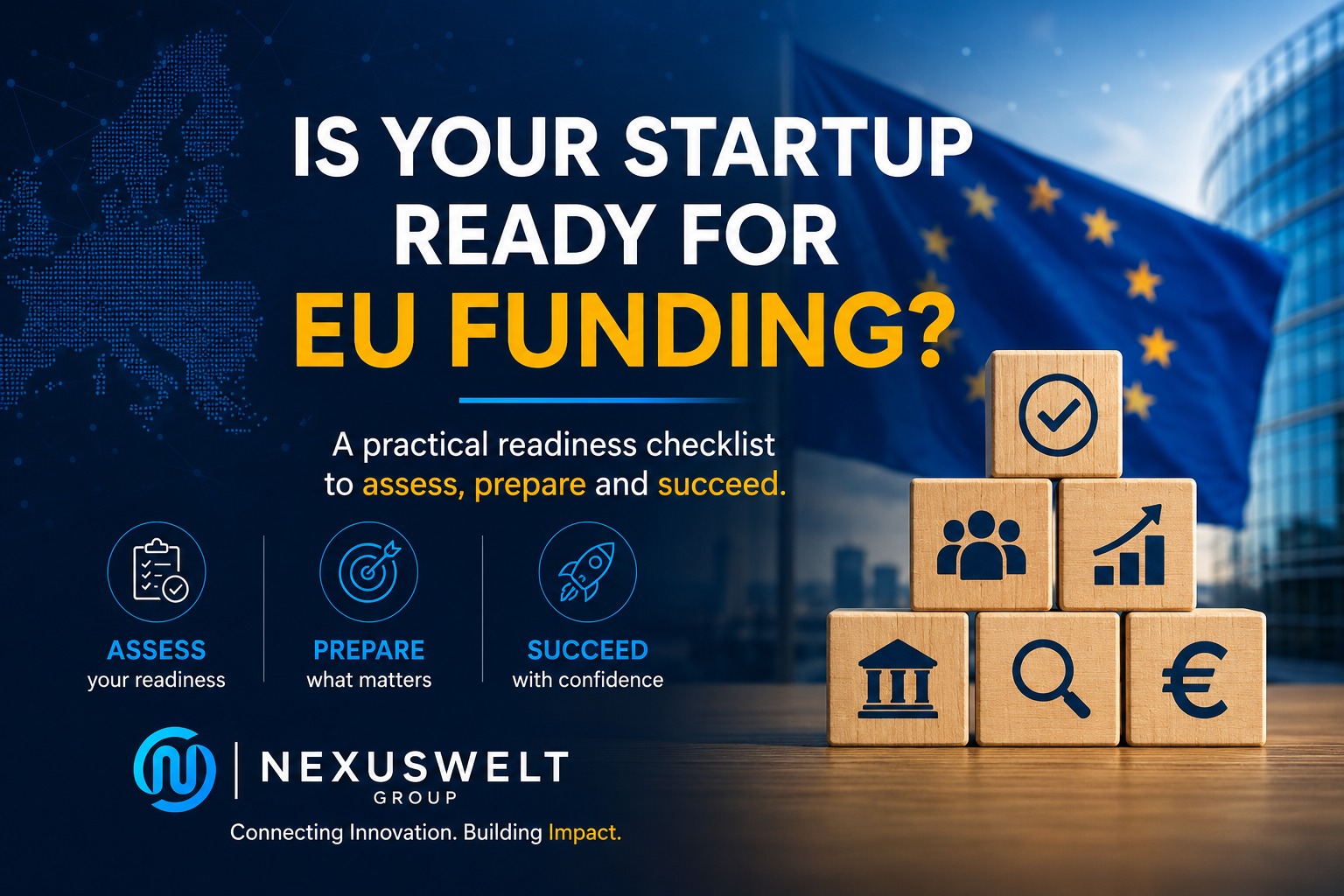
Most startups that apply for European funding and fail do not fail because the idea was weak. They fail because they were not ready to apply, and nobody told them before they spent eight weeks finding out. This checklist exists so you can fail on paper instead. Work through it…
There is no shortage of information about Canada’s association to Horizon Europe. Almost all of it is written for researchers at universities, by government departments and university international offices, and it explains eligibility very well. This guide is written for Canadian companies — SMEs, scale-ups, technology providers and industrial R&D…
Three to five independent experts will read your proposal. Each spends a few hours on it before the consensus meeting. In that time they are trying to answer one question about this part of the document: will these results leave the lab? A vague paragraph answers that question badly, and…
Lump sum funding is usually introduced with a single sentence: you report on what you delivered instead of what you spent. That is accurate, and it is also the reason so many consortia are caught out by it. The sentence describes what happens after the grant is signed. It says…
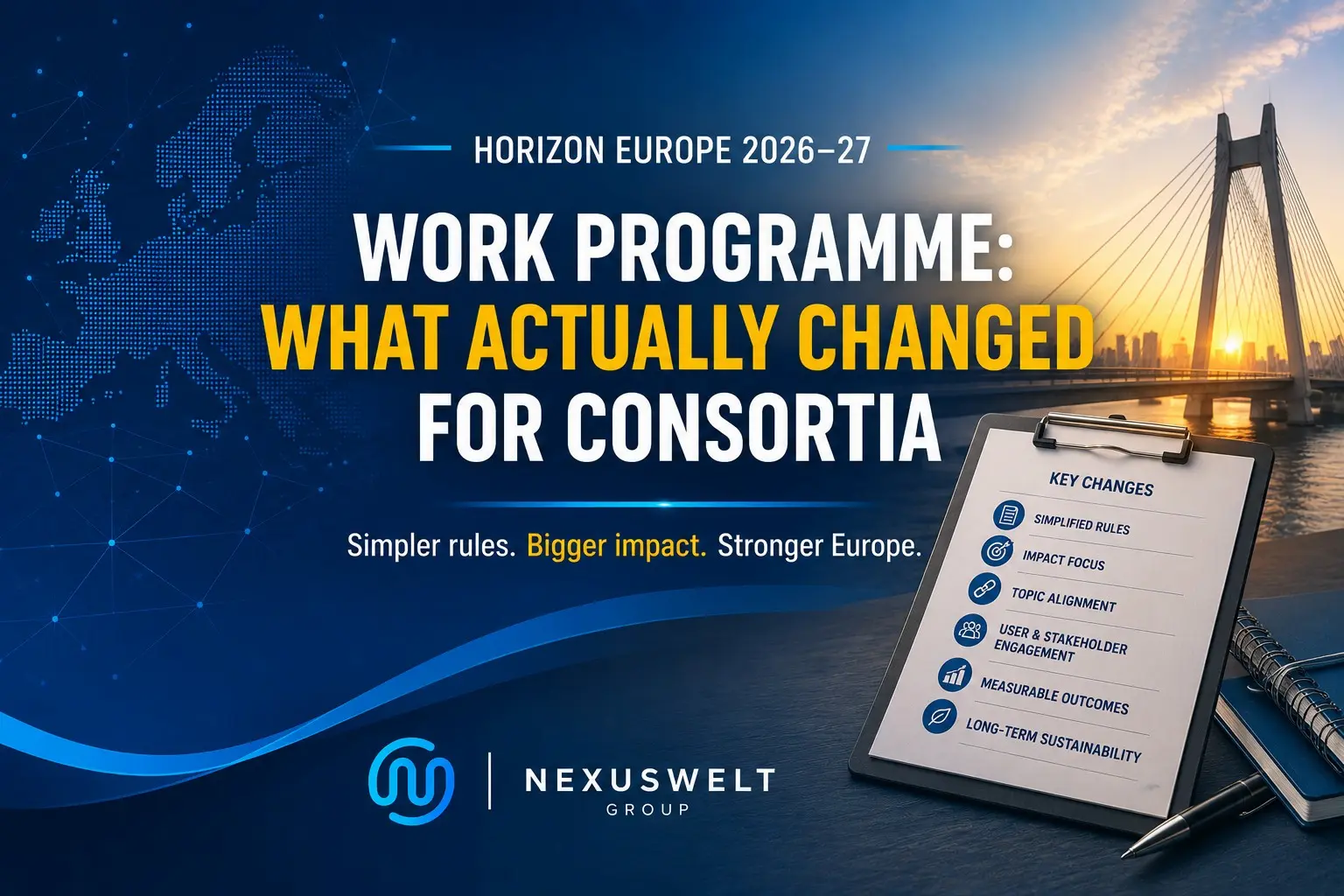
Munich, 14 August 2026 · Nexuswelt Group The 2026–27 work programme was widely reported as a simplification exercise. Most coverage listed the changes accurately and stopped there. What has been written far less often is what they mean operationally — how they change the way a consortium is designed, how…
Building a consortium is the part of Horizon Europe that no rulebook prepares you for. The eligibility conditions take a paragraph to state. Assembling seven organisations across five countries who trust each other enough to co-sign a budget takes months. This guide is for organisations doing it for the first…
Most founders begin the search for European funding in the wrong place: by browsing calls. The result is predictable – hours spent reading topic texts that were never written for their stage of company, followed by a rushed application to whichever call happens to close soonest. The sequence that works…
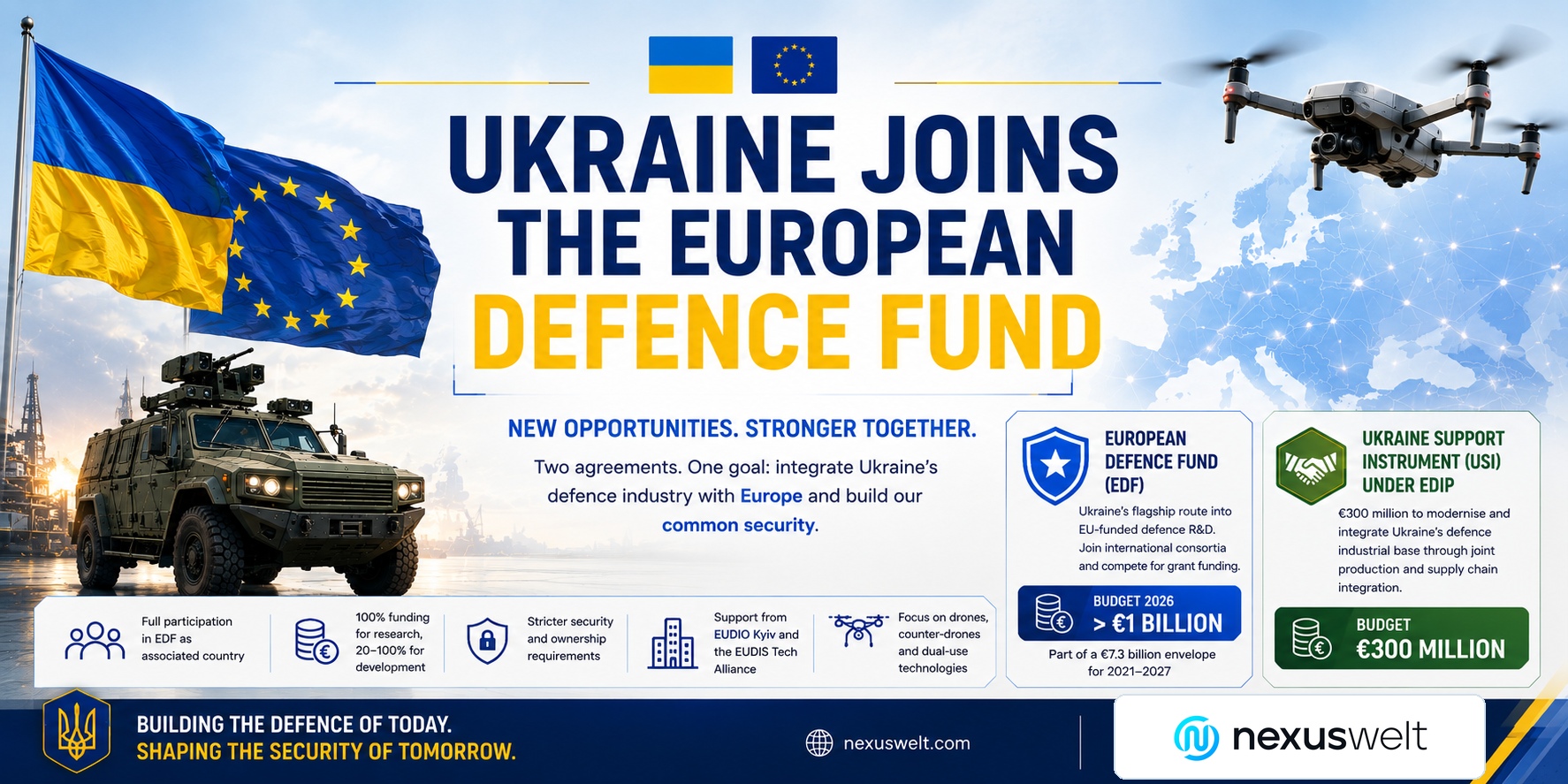
Mid-July 2026, at the EU–Ukraine Defence Industry Forum in Kyiv, Ukraine’s Minister of Defence Mykhailo Fedorov and the EU’s Commissioner for Defence and Space Andrius Kubilius signed two agreements that change what Ukrainian defence and dual-use companies can access. The first associates Ukraine to the European Defence Fund. The second…
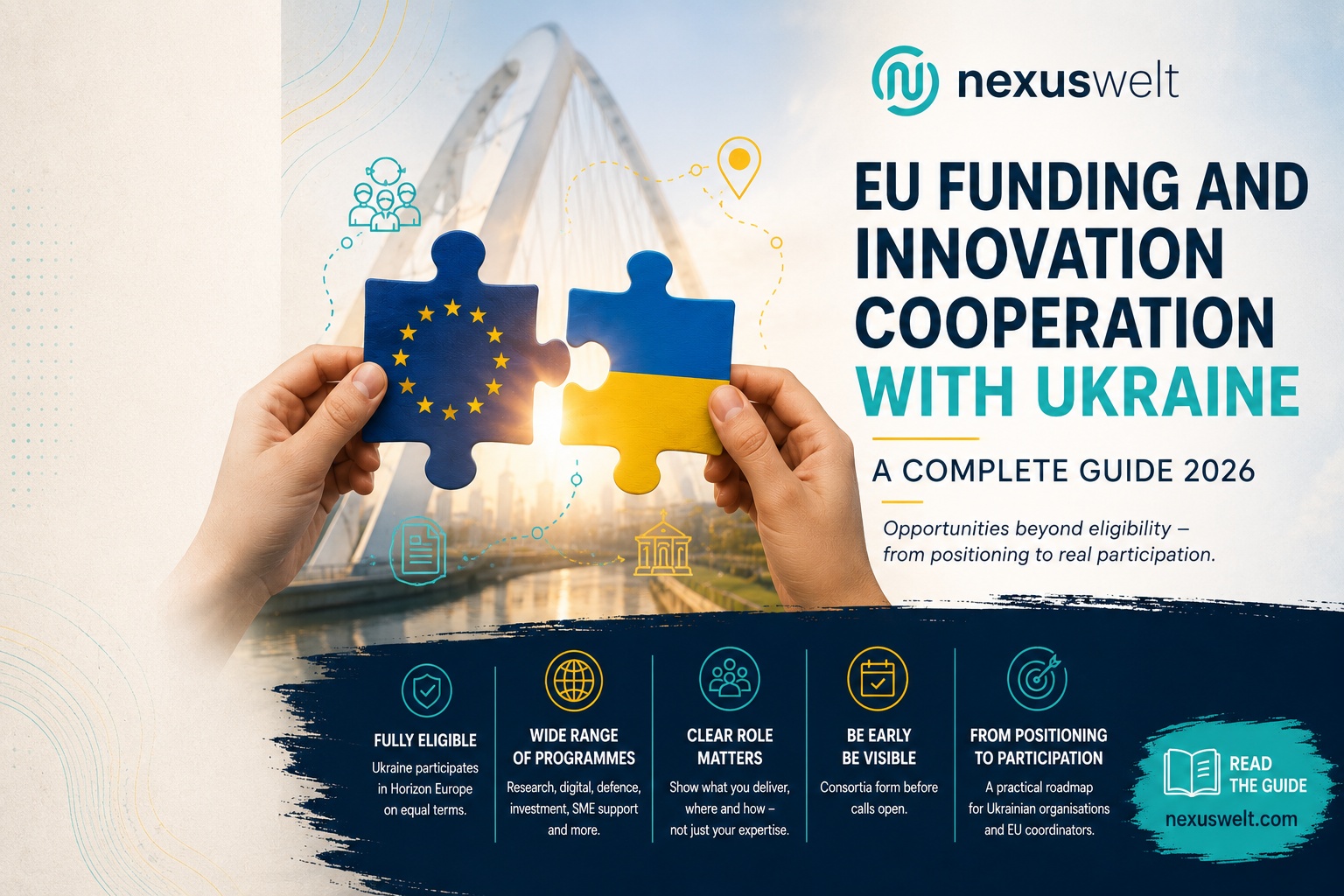
This guide is written for two audiences at once, because the gap between them is the actual problem. On one side are Ukrainian companies, universities and research organisations that are formally eligible for European funding but still do not appear in enough European consortia. On the other are European coordinators…